

Best Textile Testing Equipment for Small Labs (Budget Guide 2026)
Best Textile Testing Equipment for Small Labs (Budget Guide 2026)
Setting up a textile testing laboratory on a limited budget can be challenging, especially for small businesses, startups, and garment manufacturers. However, with the right planning and smart investment, even a small lab can achieve high accuracy and meet international quality standards.
Textile testing equipment helps manufacturers ensure fabric durability, color consistency, and compliance with global standards such as ISO and ASTM.
This complete guide will help you understand:
- Essential textile testing equipment for small labs
- Budget-friendly setup strategies
- Equipment selection tips
- Cost estimation for Bangladesh and global markets
Why Small Textile Labs Need Testing Equipment
Even small-scale textile labs must perform basic quality testing to:
Ensure Product Quality
Testing ensures fabrics meet durability and performance requirements.
Reduce Production Defects
Poor testing can lead to fabric failure and customer complaints.
Meet Export Standards
Global buyers require strict compliance with testing standards.
Improve Brand Reputation
Consistent quality builds trust and long-term business growth.
Textile testing equipment is essential for evaluating properties like strength, abrasion, colorfastness, and moisture behavior.
Budget Planning for Small Textile Labs
Before purchasing equipment, it is important to define your budget.
Typical Budget Range:
- Small Lab Setup: $2,000 – $10,000
- Medium Lab Setup: $10,000 – $50,000
Entry-level labs should focus on essential equipment only and scale gradually.
Even basic textile setups require investment in core tools to ensure proper functionality and quality control.
Essential Textile Testing Equipment (Budget-Friendly)
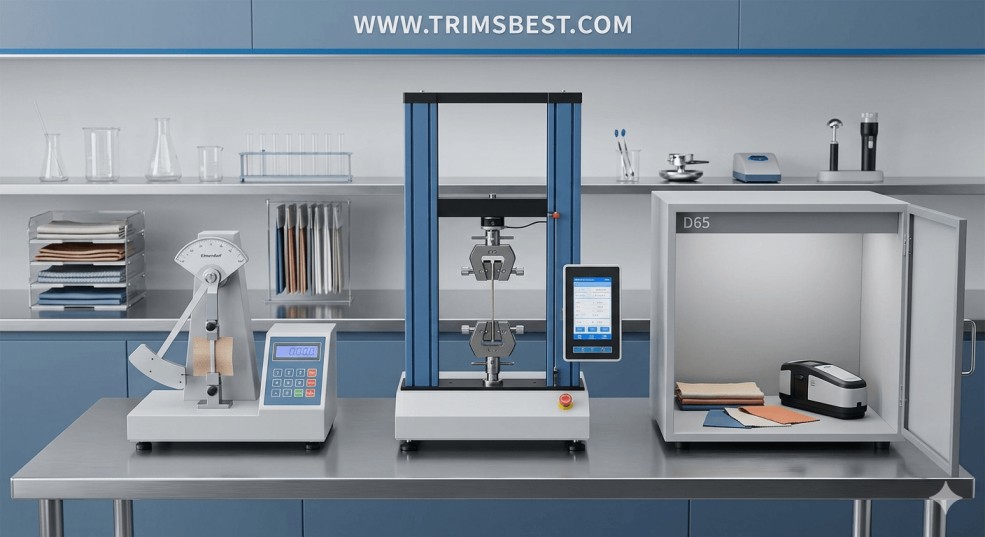
Below are the most important machines every small textile lab should have:
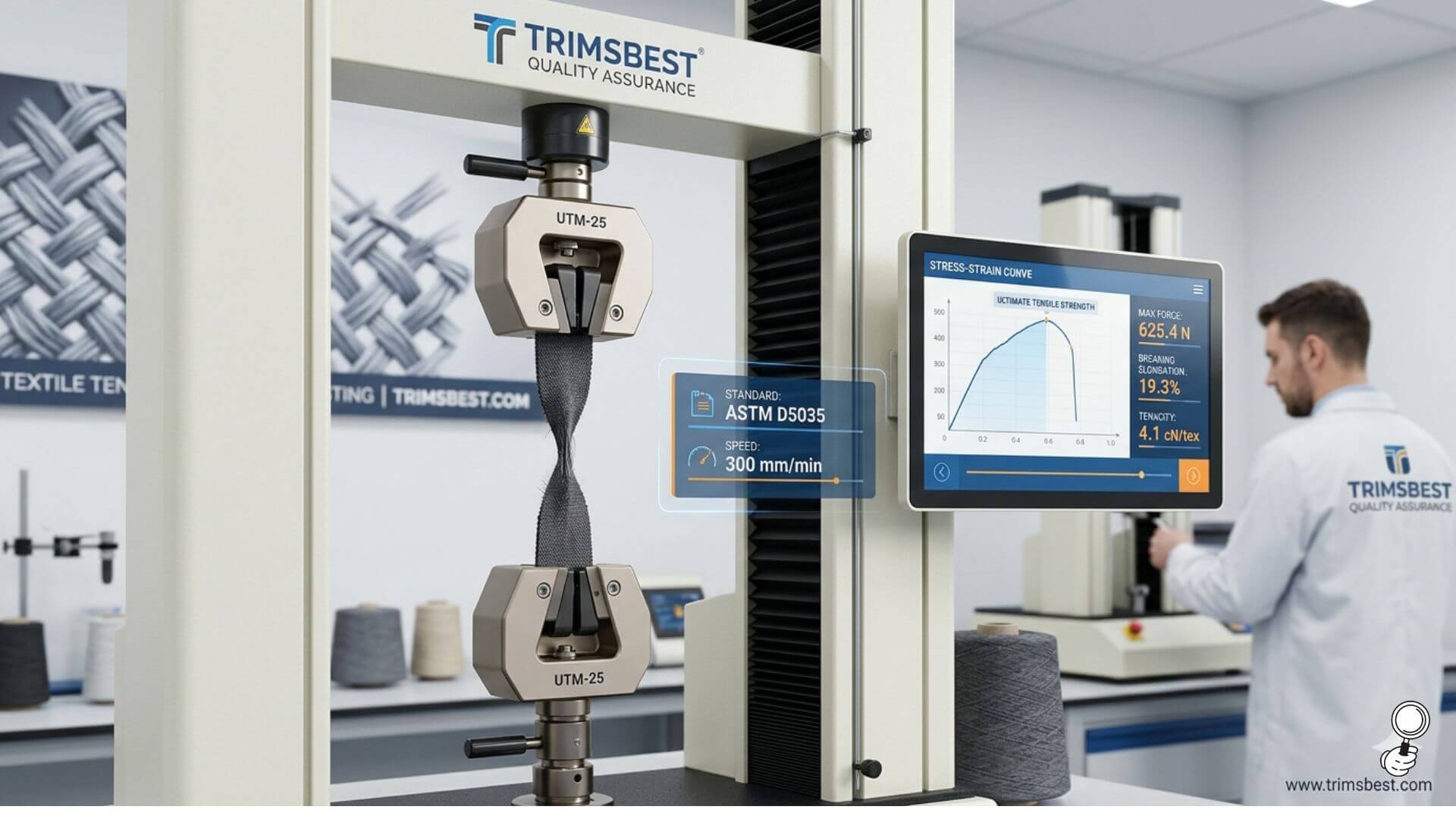
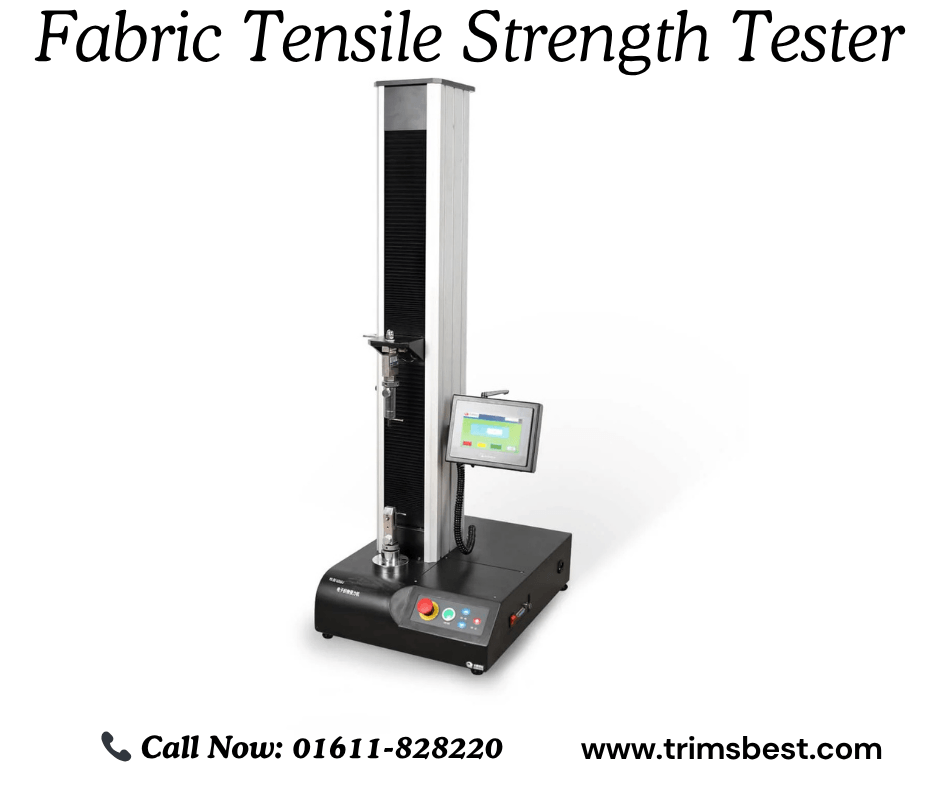
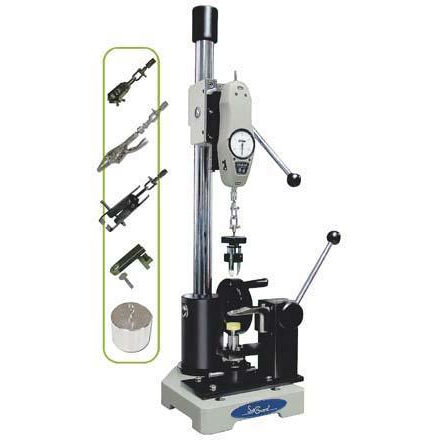
1. Tensile Strength Tester (Most Important)
Function:
Measures fabric strength and elongation.
Why It’s Important:
- Determines durability
- Ensures export quality
- Essential for all textile labs
Tensile testing machines are widely used to evaluate fabric resistance to force and ensure product reliability.
Budget Tip:
- Start with a basic universal tester
- Upgrade later if needed
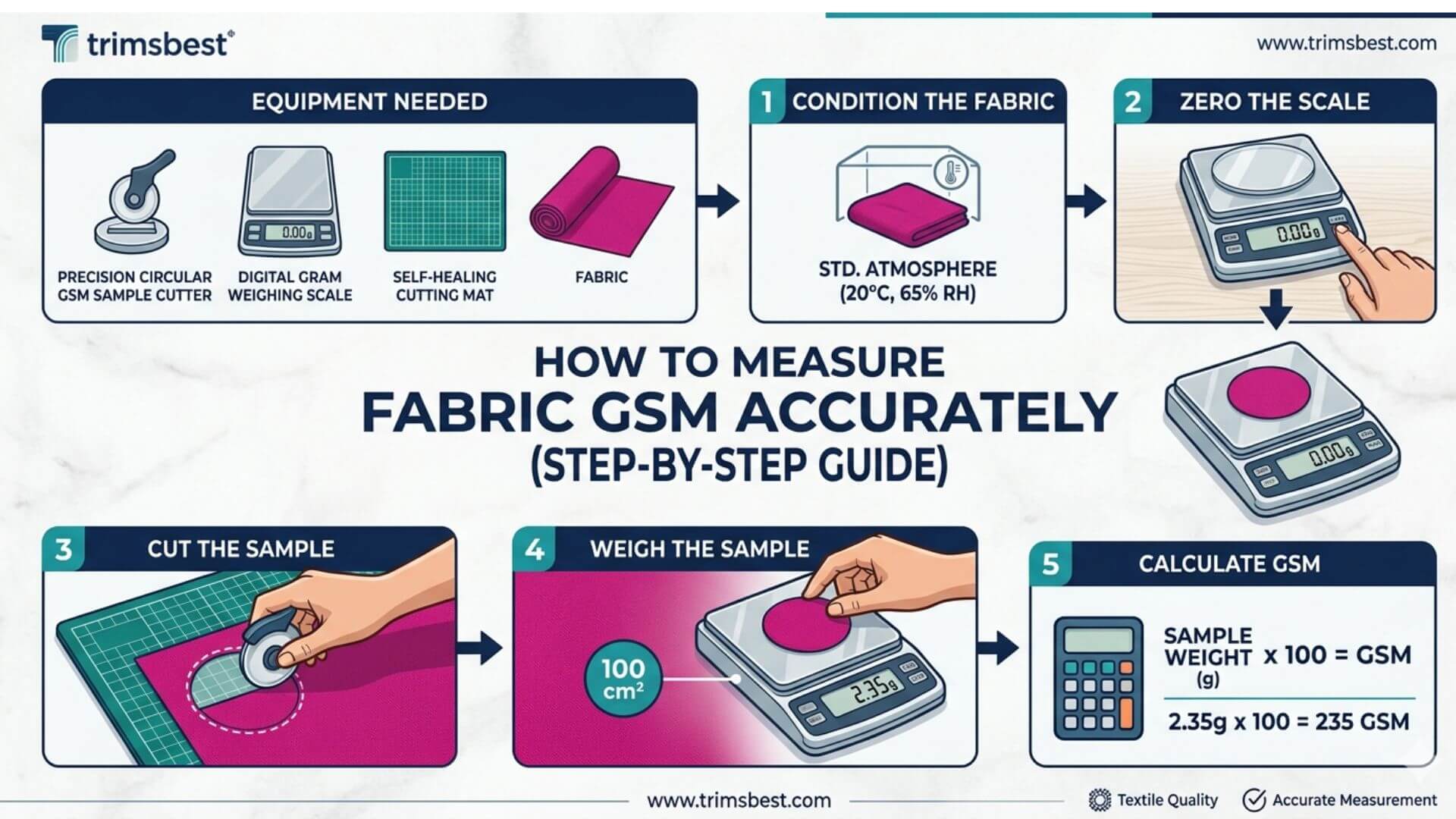
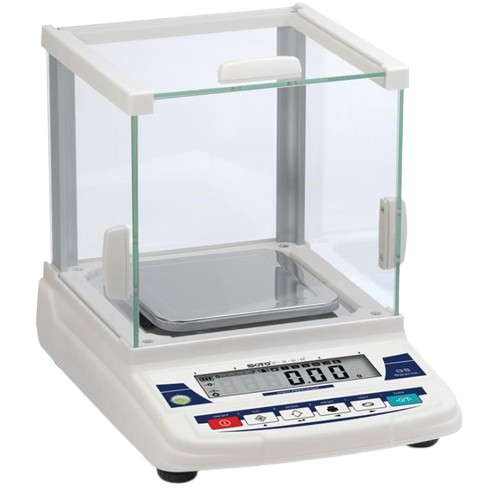
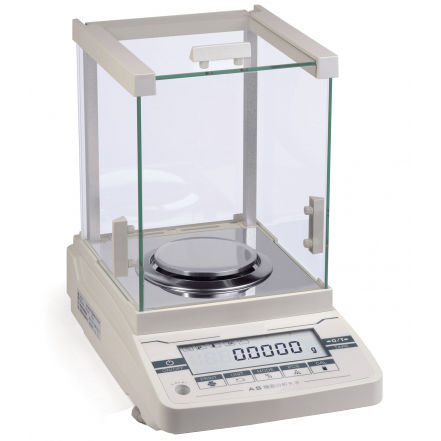
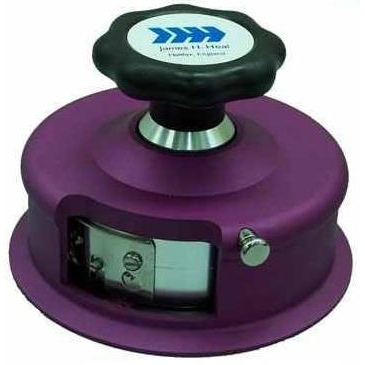
2. GSM Cutter & Digital Balance
Function:
Measures fabric weight (GSM).
Importance:
- Maintains consistency
- Helps in pricing
- Required for production control
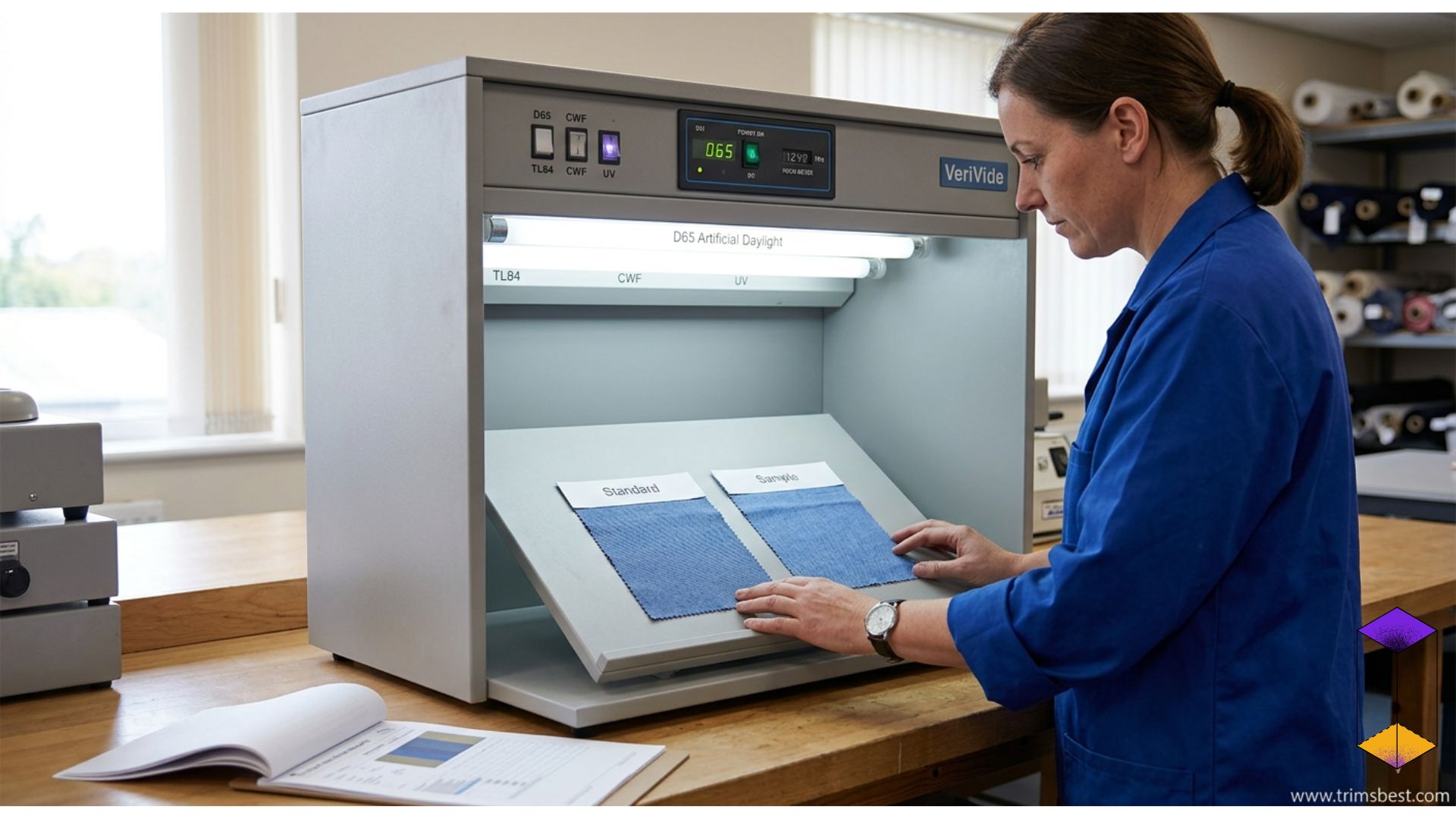
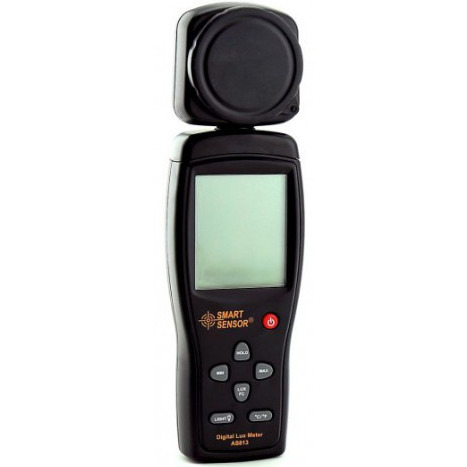
3. Color Matching Light Box
Function:
Checks color under different lighting conditions.
Benefits:
- Prevents color mismatch
- Ensures buyer approval
- Essential for export garments
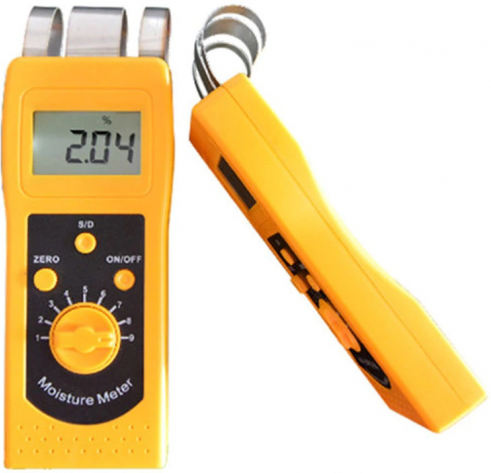
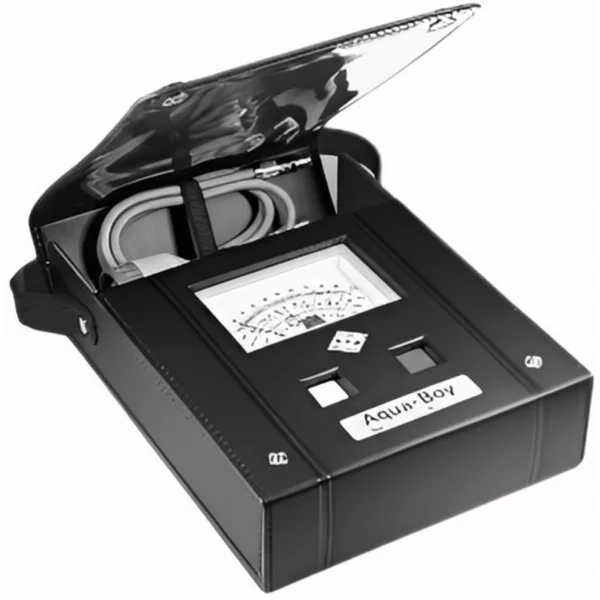
4. Moisture Meter
Function:
Measures moisture content in textiles.
Importance:
- Prevents fabric damage
- Ensures proper storage
- Improves quality control
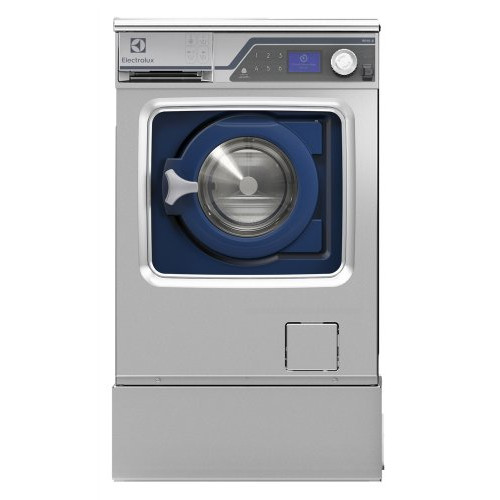
5. Shrinkage Testing Tools
Function:
Measures fabric shrinkage after washing.
Importance:
- Avoids customer complaints
- Ensures product stability
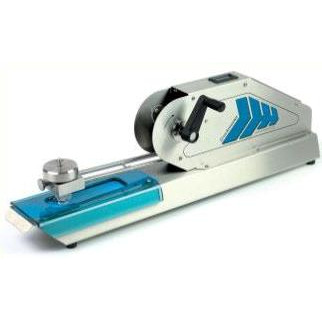
Pilling & Abrasion Tester (Optional for Small Labs)
Function:
Tests fabric surface durability.
Benefit:
- Improves product lifespan
- Enhances appearance quality
7. Color Fastness Tester
Function:
Tests resistance to washing, rubbing, and light.
Colorfastness testing ensures fabrics maintain color quality under different conditions.
Minimum Equipment Setup (Low Budget Plan)
If you have a very limited budget, start with:
Starter Package:
- GSM Cutter
- Digital Balance
- Light Box
This setup covers:
- Fabric weight
- Color consistency
- Basic quality control
Medium Budget Setup (Recommended)
Add:
- Tensile Strength Tester
- Moisture Meter
- Shrinkage Tester
This allows:
- Advanced testing
- Better quality control
- Export readiness
Advanced Setup (Future Upgrade)
Once your business grows, invest in:
- Air permeability tester
- Bursting strength tester
- Spectrophotometer
- Abrasion tester
These machines help evaluate advanced textile properties like breathability and durability.
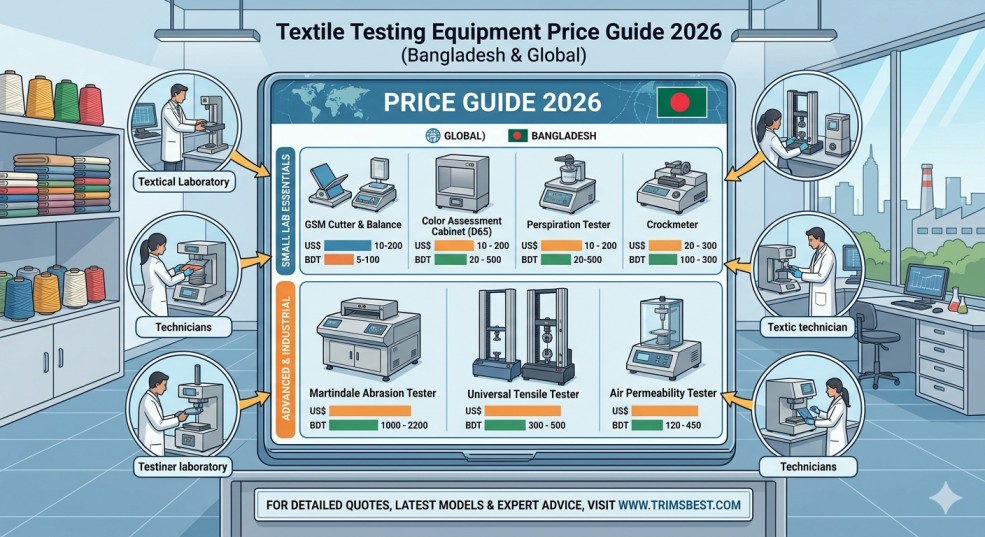
Real Price Idea (Bangladesh Market)
Textile testing equipment prices vary widely depending on quality and type.
Example Price Range:
- Basic tools: ৳10,000 – ৳50,000
- Advanced machines: ৳100,000 – ৳1,000,000+
Tip:
- Start small
- Invest in high-demand machines first
How to Choose the Right Equipment (Expert Guide)
1. Identify Your Testing Needs
Decide what you need to test:
- Fabric strength
- Color quality
- Shrinkage
2. Check Standards Compliance
Ensure equipment supports:
- ISO
- ASTM
- AATCC
Equipment meeting international standards ensures reliable and globally accepted results.
3. Choose Manual vs Automatic
| Type | Advantage |
|---|---|
| Manual | Low cost |
| Automatic | High accuracy |
Small labs should start with manual or semi-automatic machines
4. Consider Maintenance Cost
- Check spare parts availability
- Choose reliable supplier
- Ensure easy servicing
5. Focus on ROI (Return on Investment)
- Buy machines that generate business
- Avoid unnecessary equipment
Common Mistakes Small Labs Make
❌ Buying unnecessary expensive equipment
❌ Ignoring calibration
❌ Choosing low-quality machines
❌ No proper testing workflow
Pro Tips to Save Money
Smart Strategies:
- Buy multi-purpose machines
- Start with essential tests
- Upgrade step-by-step
- Buy from trusted suppliers
Internal Linking Strategy (SEO Boost)
For trimsbest.com, link this blog to:
Future of Textile Testing (Trend Insight)
Modern labs are moving toward:
- Automation
- Digital reporting
- Smart testing systems
These innovations improve efficiency and accuracy in textile testing.
Setting up a small textile testing lab does not require a huge investment if planned correctly. By focusing on essential equipment and scaling gradually, you can build a highly efficient and cost-effective laboratory.
The key is to:
- Start with basic tools
- Invest in high-impact machines
- Follow international standards
- Upgrade as your business grows