






Pantone TCX vs TPG: What’s the Difference? Complete Guide
Pantone TCX vs TPG: Which Pantone Color Guide Should You Use?
Choosing the right Pantone color reference is important for garment manufacturers, textile mills, buying houses, fashion designers, dyeing factories, accessories suppliers, and product-development teams.
Two of the most commonly discussed Pantone formats in the Fashion, Home + Interiors (FHI) system are Pantone TCX and Pantone TPG. Although they are designed to coordinate within the same FHI color system, they are produced on different substrates and are intended for different applications.
If you are looking for a Pantone TCX or TPG supplier in Bangladesh, this guide explains the differences, applications, and which reference may be more appropriate for your business.

Pantone TCX vs TPG: What’s the Difference? Complete Guide for Textile & Garment Industry
Quick Answer: Pantone TCX vs TPG
The simplest way to understand the difference is:
Pantone TCX = Textile Cotton
Pantone TPG = Textile Paper
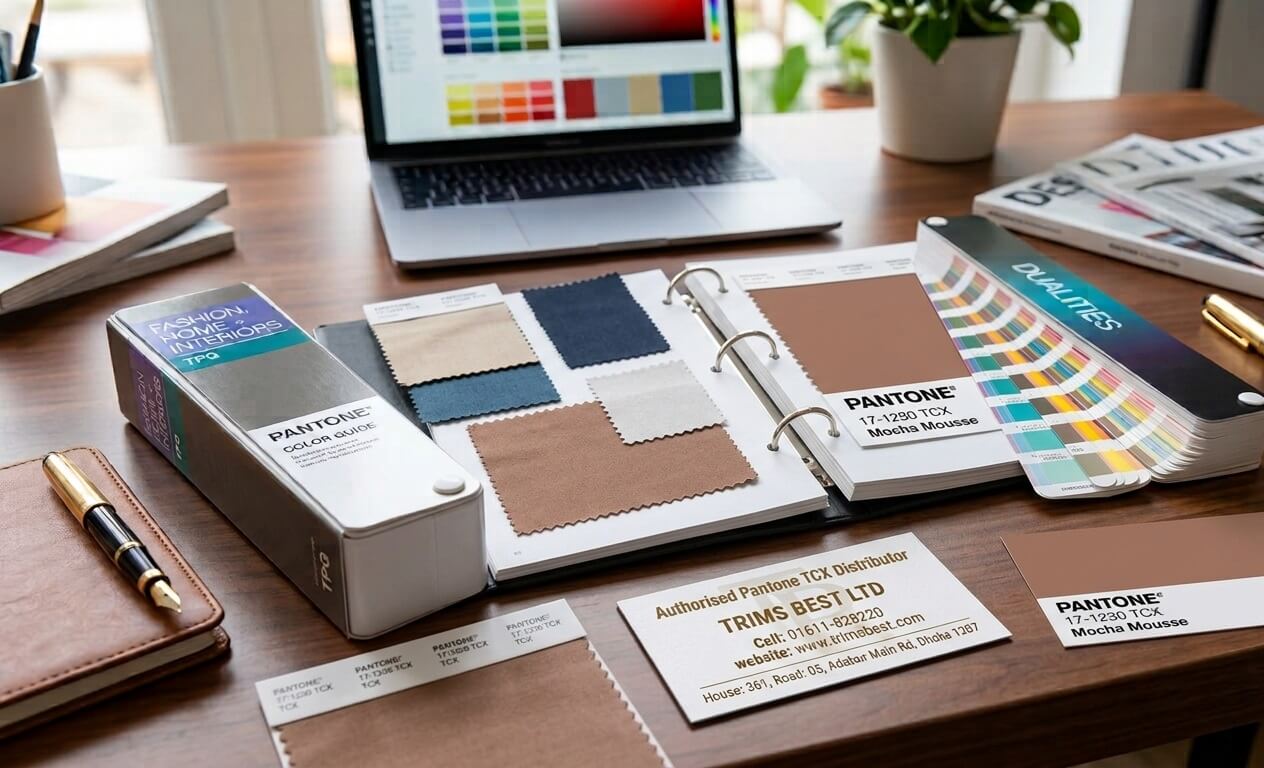
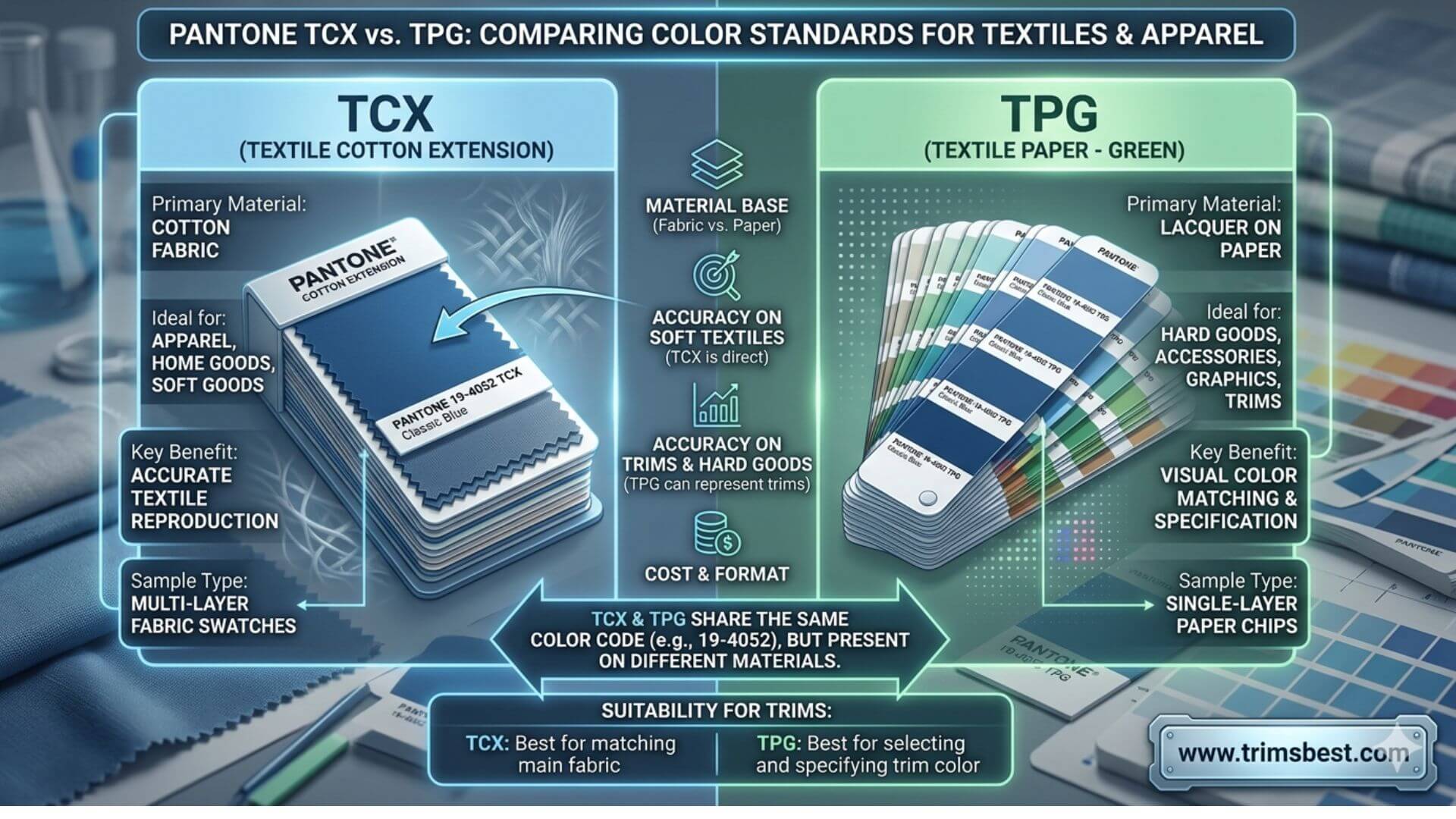
Pantone’s TCX colors are presented on cotton and are intended primarily for textile and soft-surface applications. TPG colors are produced as a lacquer coating on paper and are intended for hard surfaces and coated materials such as leather, ceramics, metal and other product surfaces. Pantone states that TPG colors correspond to its TCX colors so that designers can coordinate colors across different materials.
| Feature | Pantone TCX | Pantone TPG |
|---|---|---|
| Material | Cotton | Paper with lacquer coating |
| FHI format | Cotton | Paper |
| Main application | Textiles and soft goods | Hard/coated surfaces |
| Common industries | Garments, fabrics, fashion | Accessories, interiors, leather, ceramics, products |
| Physical reference | Cotton swatch | Paper color reference |
| Best for fabric color evaluation | Yes | Generally not the primary choice |
| Best for hard/coated surfaces | Not the primary choice | Yes |
| Relationship | Textile cotton standard | Paper counterpart for coordinating colors |
What Is Pantone TCX?
Pantone TCX is the cotton format within Pantone’s Fashion, Home + Interiors color system.
The TC designation refers to Textile Cotton, while the X identifies the extended version of the textile cotton system. Pantone’s Color Finder identifies TCX colors as part of its Cotton TCX library.
For example, a Pantone color may be identified as:
PANTONE 19-0506 TCX Black Ink
Pantone identifies this as a Cotton TCX color within the Fashion, Home + Interiors system.
Why TCX is important for garments
When a garment manufacturer or textile mill is developing a fabric shade, the physical appearance of the color on cotton is important.
TCX references are therefore particularly useful for:
- Fabric development
- Garment manufacturing
- Dyeing and finishing
- Lab-dip development
- Color approval
- Fashion design
- Textile sourcing
- Product development
- Brand color communication
A physical cotton reference can provide a more appropriate material-based standard for textile color evaluation than relying only on an RGB, HEX or computer-screen representation.
What Is Pantone TPG?
Pantone TPG is the paper format of the Fashion, Home + Interiors system.
Pantone describes TPG as Textile Paper – Green and states that the TPG format uses a lacquer coating on paper. The “Green” designation refers to the formulation used for the TPG format, including a lead- and chromium-free formulation compared with earlier TPX lacquer coatings.
For example:
PANTONE 17-1340 TPG Adobe
is identified by Pantone as a Paper TPG color within the Fashion, Home + Interiors system.
TPG is particularly useful when specifying colors for:
- Leather goods
- Ceramics
- Metal products
- Painted surfaces
- Coated surfaces
- Home furnishings
- Fashion accessories
- Consumer products
- Cosmetics and packaging-related applications
Pantone explains that TPG colors correspond to the TCX colors so that designers can coordinate a color across textiles and hard/coated surfaces.
TCX vs TPG: Key Differences
The most important difference is the physical substrate on which the color is represented.
1. TCX is cotton
TCX is physically represented on cotton, making it particularly relevant when the end product is a textile or soft good.
2. TPG is paper
TPG is represented as a lacquer coating on paper, making it suitable for applications involving hard or coated surfaces.
3. The same color can behave differently on different materials
A color can look different depending on whether it is viewed on cotton, paper, leather, metal, ceramic or another substrate.
That is why selecting the correct physical Pantone reference is important during product development.
4. TCX and TPG are designed to coordinate
TCX and TPG are not completely unrelated color systems. Pantone specifically describes TPG as corresponding to the TCX colors, allowing designers and manufacturers to coordinate colors across materials.
Pantone TCX vs TPG for Garments
For a garment factory, textile mill or fabric supplier, TCX is generally the more relevant physical reference when the color is being specified for cotton or textile materials.
A typical workflow may look like:
Buyer Color Standard → Pantone TCX → Lab Dip → Shade Evaluation → Approval → Bulk Dyeing → Production
For example, if a buyer specifies a cotton garment color using a TCX reference, the dyeing team can use the appropriate physical cotton standard during color development and approval.
Important consideration
A Pantone reference should not be treated as a substitute for the buyer’s complete color-approval procedure. Actual production shade approval should follow the requirements agreed between the brand, buyer, mill and manufacturer.
Pantone TCX vs TPG for Accessories & Trims
Accessories and trims can involve many different substrates.
Examples include:
- Metal buttons
- Zippers
- Leather labels
- Plastic components
- Buckles
- Ceramic items
- Coated accessories
- Packaging
- Fashion hardware
In these situations, a paper-based TPG reference may be more appropriate when the intended product surface is hard or coated.
However, the correct reference should always be determined by the specified application and buyer requirement.
If the buyer specifies a particular Pantone format, use that format rather than substituting another reference simply because the numerical color appears similar.
Which One Should a Bangladesh Garment Factory Buy?
For a Bangladesh garment factory, the answer depends on what you are producing and what your buyer specifies.
Choose Pantone TCX when:
- You primarily work with cotton textiles.
- You develop fabric colors.
- You handle lab dips.
- You work with garment buyers and brands specifying TCX.
- Your production involves woven or knitted textile materials.
- You need a physical cotton color reference.
Consider Pantone TPG when:
- You develop hard or coated products.
- You work with leather or leather-like products.
- You develop fashion accessories.
- You work with ceramics or metal products.
- Your buyer specifies TPG.
- You need to coordinate colors between textile and hard-surface products.
For a large garment or textile organization
Many organizations may benefit from having access to both formats when their product range includes textiles as well as accessories or other materials.
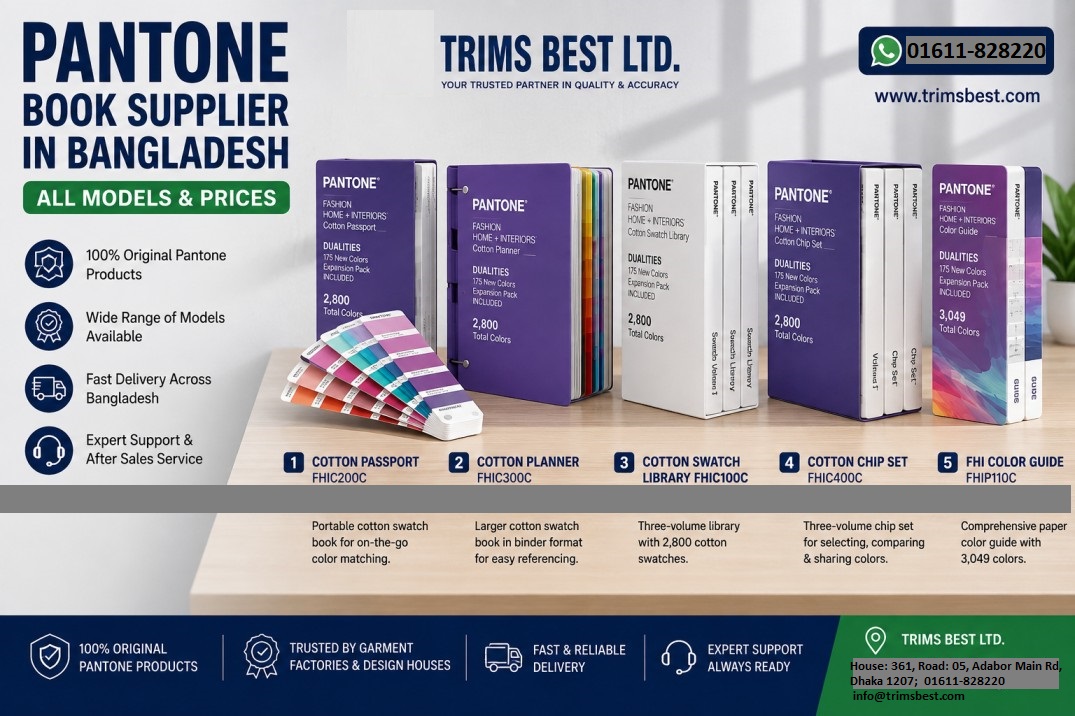
Pantone Cotton Passport
The Pantone FHI Cotton Passport is a portable cotton color reference designed for textile and fashion professionals.
The current FHIC200C Cotton Passport + Dualities Expansion Pack contains 2,625 FHI colors plus 175 new Dualities colors, giving a total of 2,800 colors in that product edition. Pantone describes the Passport as a portable tool suitable for fabric stores, showrooms, client meetings, mills and production environments.
Suitable for:
- Garment merchandisers
- Fashion designers
- Textile mills
- Buying houses
- Product developers
- Dyeing factories
- Production teams
Its compact format makes it convenient for professionals who need to carry a physical cotton color reference between meetings, factories, mills and showrooms.
Pantone Cotton Planner
The Pantone FHI Cotton Planner provides a larger desktop-oriented cotton reference.
It is particularly suitable for organizations where color development takes place regularly at a fixed location, such as:
- Textile design departments
- Garment factories
- Color laboratories
- Dyeing departments
- Product-development teams
- Fashion studios
For a team that frequently compares multiple textile colors, a larger desktop reference can be more convenient than a portable color book.
Pantone FHI Color Guide
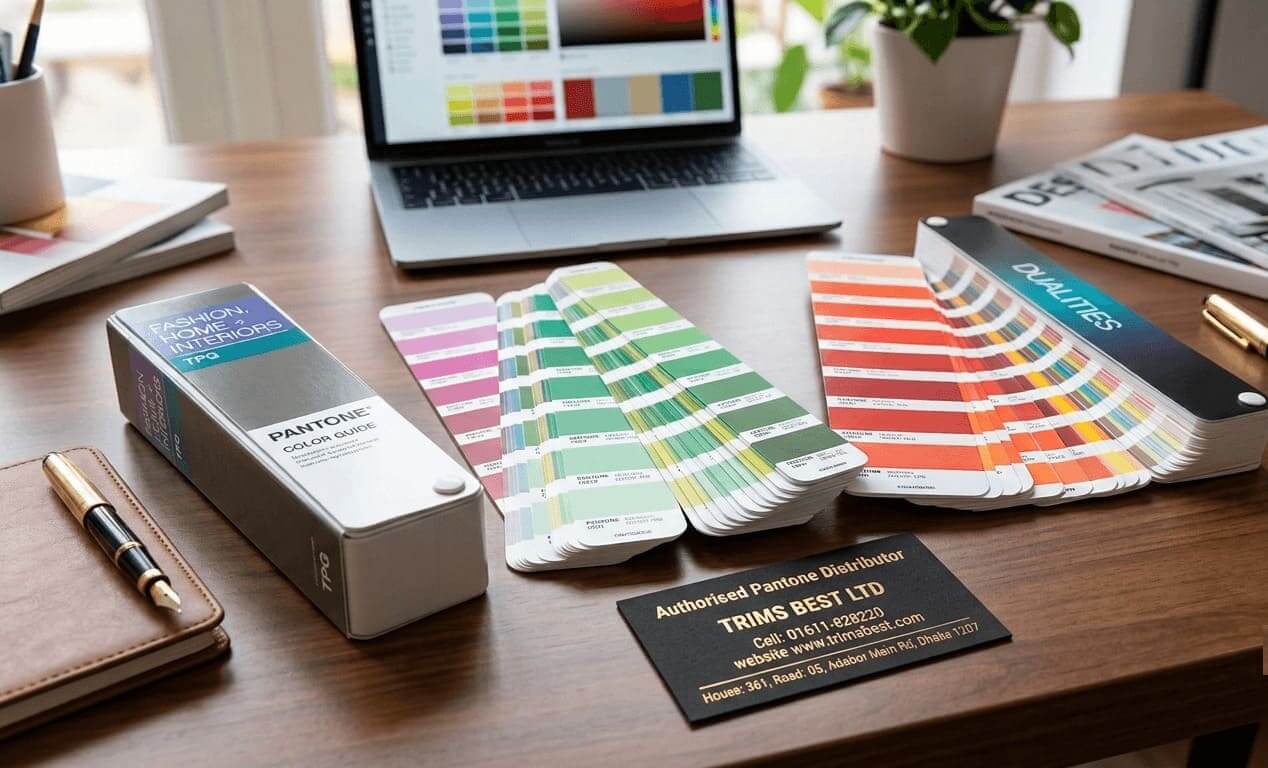
The Pantone Fashion, Home + Interiors Color Guide is a paper-based FHI reference designed primarily for applications involving hard products, accessories, coatings and other surfaces.
Pantone describes the FHI Color Guide as a portable collection of FHI colors produced as a lacquer coating on paper. The TPG colors are intended to provide visual counterparts to the TCX colors in the cotton system.
It can be useful for:
- Fashion accessories
- Leather goods
- Cosmetics
- Ceramics
- Paint
- Consumer products
- Home furnishings
- Hard surfaces
For a company working primarily with fabric, however, a cotton reference such as the Cotton Passport or Cotton Planner may be more appropriate.
Why Physical Pantone References Matter
Digital color values displayed on a monitor are not a substitute for physically evaluating an actual Pantone standard.
Pantone itself warns that colors displayed digitally can be simulations and recommends consulting physical Pantone publications when visually evaluating color standards.
This is especially important in textile production because the final appearance of a color can be influenced by:
- Substrate
- Fiber type
- Dye chemistry
- Fabric construction
- Surface finish
- Lighting
- Viewing conditions
- Manufacturing process
For this reason, professional color approval should involve appropriate physical standards and controlled evaluation procedures.
Pantone TCX, TPG and Color Matching in Bangladesh
Bangladesh is one of the world’s major apparel and textile manufacturing locations, so accurate color communication is important throughout the supply chain.
A typical color-development process can involve several parties:
International Brand
↓
Buying House / Merchandiser
↓
Garment Factory
↓
Textile Mill / Dyeing Factory
↓
Lab Dip Development
↓
Color Approval
↓
Bulk Production
↓
Final Inspection
A standardized physical color reference helps these parties communicate the intended color more consistently.
For garment manufacturers, the important point is not simply to purchase a Pantone book. The correct reference must be selected according to the buyer’s specification, material and intended application.
Pantone TCX vs TPG: Which Is Better?
There is no universal answer to which system is “better.”
The better question is:
Which Pantone format matches the material and application?
For cotton and textile products:
Pantone TCX
For hard/coated surfaces:
Pantone TPG
For portable textile color development:
Cotton Passport
For desktop textile color development:
Cotton Planner
For broader FHI paper-based applications:
FHI Color Guide
The most important rule is to follow the color reference specified by your buyer, brand or product-development team.
Pantone Products Available from Trims Best
Trims Best can assist Bangladesh-based textile, garment and product-development companies with sourcing Pantone color references.
Available or commonly requested FHI products include:
Pantone FHI Color Guide
SKU: FHIP110C / current applicable edition
For FHI paper-based color communication and hard/coated surface applications.
Pantone FHI Cotton Passport
SKU: FHIC200C
Portable cotton reference for textile and fashion applications.
Pantone FHI Cotton Planner
SKU: FHIC300C
Desktop cotton reference for textile color development.
Pantone FHI Cotton Swatch Library
SKU: FHIC100C
A comprehensive cotton swatch reference for professional color development.
Pantone FHI Cotton Chip Set
SKU: FHIC400C
Multi-volume cotton reference designed for selecting, comparing and sharing colors.
Pantone Dualities Expansion Pack
For compatible Pantone FHI products requiring the additional Dualities color collection.
Product availability, SKU and edition should be confirmed before ordering because Pantone periodically updates its product range. Pantone’s current FHI product portfolio includes Cotton Passport, Cotton Planner, Cotton Swatch Library, Cotton Chip Set and FHI Color Guide products.
How to Order Pantone Color Books in Bangladesh
If you need a Pantone color book for a garment factory, textile mill, buying house or fashion business in Bangladesh, contact Trims Best Ltd.
Before requesting a quotation, provide:
- Pantone product name
- SKU/model, if known
- Required quantity
- Intended application
- Delivery location
- Any buyer-specific requirement
If you are unsure whether you need TCX, TPG, Cotton Passport, Cotton Planner, or FHI Color Guide, please tell us which material and product you are working with, and we can help identify the appropriate Pantone reference.
Contact Trims Best Ltd.
Trims Best Ltd.
Pantone & Textile Testing Equipment Supplier in Bangladesh
Call / WhatsApp: 01611-828220
Website: https://www.trimsbest.com/Frequently Asked Questions
Is Pantone TCX the same as TPG?
No. TCX is the cotton format within Pantone’s FHI system, while TPG is the paper format. Pantone designs the two formats to coordinate colors across textiles and hard/coated surfaces.
What does TCX mean in Pantone?
TC refers to Textile Cotton, and the TCX designation identifies the extended cotton format used in Pantone’s FHI system.
What does TPG mean in Pantone?
TPG refers to Textile Paper – Green, Pantone’s paper-based FHI format. Pantone explains that the TPG formulation is lead- and chromium-free compared with earlier TPX lacquer coatings.
Which is better for garments, TCX or TPG?
For textile and cotton fabric color development, TCX is generally the more appropriate physical reference because it is presented on cotton.
Can TPG be used for textile color matching?
TPG is designed to correspond with TCX colors and can help coordinate colors across materials, but for physical textile evaluation, the appropriate cotton TCX reference should generally be used when the specification calls for it.
Which Pantone book is best for a garment factory?
For a garment factory working extensively with textile colors, the Cotton Passport or Cotton Planner can be practical choices. The correct selection depends on your workflow, required format and buyer specification.
What is Pantone FHIC200C?
FHIC200C is the Fashion, Home + Interiors Cotton Passport + Dualities Expansion Pack. Pantone currently describes it as containing 2,625 FHI colors plus 175 Dualities colors, for 2,800 colors in the product edition.
Where can I buy Pantone color books in Bangladesh?
Contact Trims Best Ltd. at 01611-828220 for product availability and quotation.
Final Recommendation
If your business is primarily garments, fabrics, dyeing and textile production, start with a suitable Pantone TCX/cotton reference.
If you also manufacture or develop accessories, leather goods, coated products, ceramics, metal or other hard surfaces, consider the appropriate Pantone TPG/FHI paper reference as well.
For professional color management, always confirm the required Pantone format with the buyer or brand before purchasing and before approving production colors.