













How Sustainable Fashion Is Saving the Planet
Sustainable Fashion Revolution: How Eco-Friendly Textiles Are Changing the Garment Industry
The global fashion industry is experiencing a major transformation. Consumers are no longer focused only on style and affordability. Today, sustainability, ethical sourcing, eco-friendly textiles, and responsible garment manufacturing have become central priorities for brands, manufacturers, and buyers worldwide.
The sustainable fashion revolution is changing how clothing is designed, produced, distributed, and recycled. From organic cotton farming to recycled polyester fabrics and water-saving textile technologies, the apparel industry is moving toward a greener future.
As climate concerns continue to grow, textile manufacturers and garment exporters are investing heavily in sustainable textile manufacturing practices to reduce environmental impact and meet international compliance requirements.
In this comprehensive guide, we explore the latest trends in eco-friendly textiles, sustainable garment production, recycled fabrics, green manufacturing technologies, certifications, and the future of sustainable fashion in 2026 and beyond.
What Is Sustainable Fashion?
Sustainable fashion refers to clothing, textiles, and accessories produced using environmentally friendly and socially responsible methods. It focuses on reducing waste, conserving natural resources, improving labor conditions, and minimizing carbon emissions throughout the supply chain.
Sustainable fashion includes:
- Eco-friendly textile manufacturing
- Ethical garment production
- Organic fabric sourcing
- Recycling and upcycling materials
- Reducing textile waste
- Water-saving dyeing technologies
- Carbon-neutral production methods
- Circular fashion systems
The goal is to create clothing that has a lower environmental footprint while maintaining quality, durability, and affordability.
Why Sustainable Fashion Is Growing Worldwide
1. Rising Consumer Awareness
Modern consumers are increasingly aware of the environmental impact of fast fashion. Social media, documentaries, and global climate discussions have exposed the pollution caused by traditional textile production.
Consumers now actively search for:
- Sustainable clothing brands
- Organic cotton garments
- Recycled fabric products
- Ethical fashion companies
- Eco-friendly textile manufacturers
This growing demand is forcing brands to adopt greener production methods.
2. Environmental Impact of Traditional Textile Manufacturing
The textile industry is one of the world’s largest polluters.
Major environmental issues include:
- Excessive water consumption
- Chemical pollution
- Microplastic release
- Carbon emissions
- Textile landfill waste
- Hazardous dyeing chemicals
Traditional garment production often consumes massive amounts of water and energy while generating large quantities of waste.
For example:
- A single cotton t-shirt can require thousands of liters of water during production.
- Synthetic fabrics release microplastics into oceans during washing.
- Textile dyeing contributes heavily to industrial water pollution.
Sustainable textile manufacturing aims to reduce these impacts significantly.
Eco-Friendly Textiles Transforming the Garment Industry
Organic Cotton Fabric
Organic cotton is produced without synthetic pesticides, chemical fertilizers, or genetically modified seeds.
Benefits of Organic Cotton
- Reduced water pollution
- Healthier farming conditions
- Lower chemical exposure
- Improved soil fertility
- Better biodegradability
Organic cotton is now widely used in:
- T-shirts
- Baby clothing
- Fashion apparel
- Home textiles
- Sportswear
Recycled Polyester: Turning Plastic Waste Into Fashion
Recycled polyester is one of the fastest-growing sustainable textile innovations.
Manufacturers produce recycled polyester fabric from:
- Plastic bottles
- Industrial plastic waste
- Ocean plastic waste
- Used garments
Advantages of Recycled Polyester
- Reduces landfill waste
- Saves petroleum resources
- Lower carbon footprint
- Supports circular economy
Organic Cotton vs Recycled Polyester
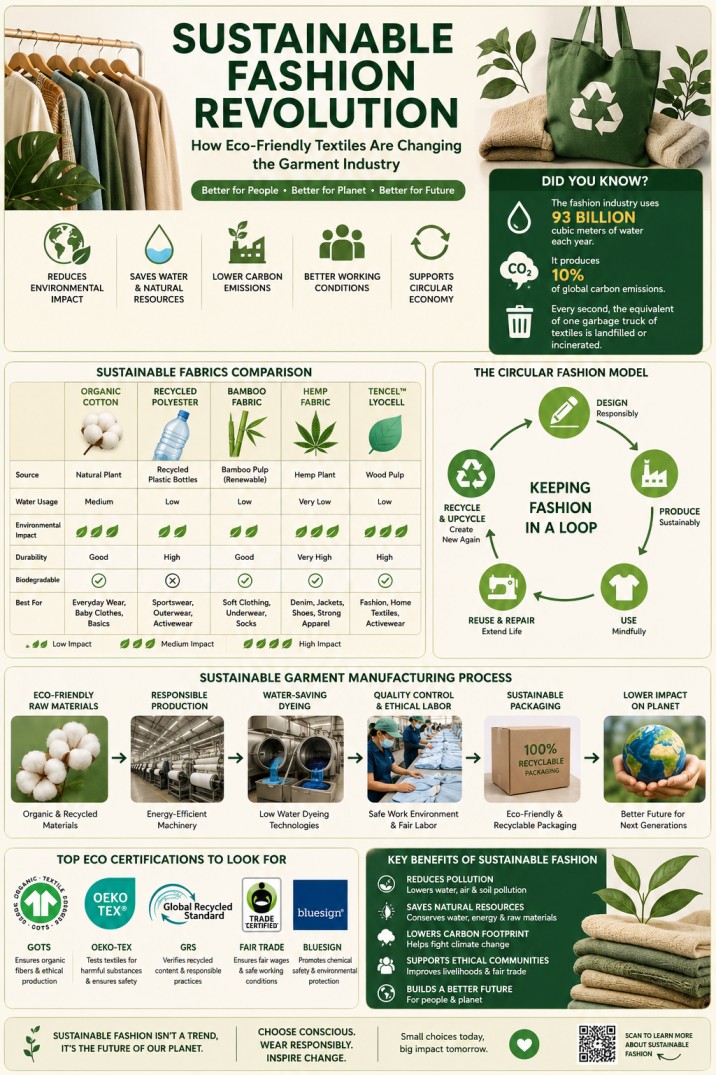
| Feature | Organic Cotton | Recycled Polyester |
|---|---|---|
| Source | Natural plant fiber | Recycled plastic |
| Water Usage | Medium | Low |
| Biodegradable | Yes | No |
| Durability | Moderate | High |
| Carbon Footprint | Low | Very Low |
| Moisture Absorption | Excellent | Moderate |
Both materials play important roles in sustainable garment manufacturing.
Bamboo Fabric: A Rising Eco-Friendly Textile
Bamboo fabric is becoming increasingly popular due to its softness and sustainability potential.
Benefits of Bamboo Textiles
- Naturally antibacterial
- Soft and breathable
- Fast-growing renewable resource
- Moisture-wicking properties
Challenges
Some bamboo processing methods use harsh chemicals. Therefore, certified sustainable bamboo processing is essential.
Hemp Fabric and Sustainable Textile Innovation
Hemp is one of the oldest and most sustainable textile fibers.
Why Hemp Is Sustainable
- Requires less water
- Minimal pesticide use
- Strong and durable
- Biodegradable
- Improves soil health
Hemp textiles are increasingly used in:
- Denim
- Jackets
- Casual wear
- Industrial textiles
Innovative Sustainable Fabric Technologies
The future of sustainable fashion depends heavily on textile innovation.
Bio-Based Fabrics
Scientists are developing fabrics from:
- Mushroom leather
- Pineapple fiber
- Banana fiber
- Seaweed textiles
- Orange peel fiber
These innovative materials reduce dependency on petroleum-based synthetic fabrics.
Waterless Dyeing Technology
Traditional textile dyeing consumes enormous amounts of water.
Modern sustainable dyeing technologies now include:
- Air dyeing
- CO₂ dyeing
- Digital printing
- Foam dyeing
Benefits
- Reduced water usage
- Lower chemical waste
- Faster production
- Improved sustainability
Sustainable Garment Manufacturing Process
Eco-friendly garment manufacturing focuses on reducing waste and energy consumption throughout production.
Key Sustainable Manufacturing Practices
Energy-Efficient Machinery
Modern textile factories use:
- Smart motors
- Solar energy systems
- Automated production lines
- Energy-saving dyeing machines
Waste Reduction Systems
Factories now implement:
- Fabric recycling
- Lean manufacturing
- Digital pattern cutting
- Zero-waste production
Water Treatment Plants
Advanced wastewater treatment systems help reduce industrial pollution.
Circular Fashion: The Future of the Garment Industry
Circular fashion focuses on reusing, recycling, and extending the lifespan of clothing products.
Instead of the traditional “produce-use-dispose” model, circular fashion promotes:
- Clothing recycling
- Repair and reuse
- Textile recovery
- Upcycling waste fabrics
Benefits of Circular Fashion
- Reduced landfill waste
- Lower carbon emissions
- Resource conservation
- Sustainable consumption
Global brands are investing heavily in circular textile systems.
How Fashion Brands Reduce Textile Waste
Leading apparel brands now adopt multiple strategies to reduce textile waste.
Popular Waste Reduction Methods
Fabric Optimization Software
AI-powered systems optimize fabric cutting layouts.
Deadstock Fabric Reuse
Unused fabric inventory is reused in new collections.
Garment Recycling Programs
Consumers return old clothing for recycling.
Sustainable Packaging
Brands replace plastic packaging with biodegradable alternatives.
Eco Certifications Explained
Sustainability certifications help consumers identify genuine eco-friendly textile products.
Important Textile Sustainability Certifications
GOTS (Global Organic Textile Standard)
Ensures:
- Organic fiber content
- Safe chemical processing
- Ethical labor standards
OEKO-TEX Certification
Tests textiles for harmful substances.
Global Recycled Standard (GRS)
Verifies recycled material content and sustainability practices.
Fair Trade Certification
Ensures ethical working conditions and fair wages.
Bluesign Certification
Focuses on chemical safety and environmental protection.
Sustainable Textile Manufacturing in Bangladesh
Bangladesh is becoming a major leader in sustainable garment manufacturing.
The country has invested heavily in:
- Green garment factories
- LEED-certified manufacturing plants
- Solar-powered textile facilities
- Water recycling systems
Bangladesh now hosts many of the world’s top environmentally certified garment factories.
Why Bangladesh Leads Sustainable Apparel Manufacturing
- Competitive production costs
- Skilled workforce
- Export-focused economy
- Strong sustainability investments
- International compliance standards
Smart Textiles and Sustainable Fashion Technology
The integration of technology is accelerating sustainable garment innovation.
Examples of Smart Sustainable Textiles
- Temperature-regulating fabrics
- Moisture-monitoring sportswear
- Self-cleaning textiles
- Conductive eco-fabrics
AI and IoT systems also improve:
- Production efficiency
- Supply chain monitoring
- Energy management
- Quality control
Consumer Demand Driving Sustainable Fashion Growth
Consumers increasingly prefer:
- Ethical clothing brands
- Transparent supply chains
- Sustainable materials
- Recyclable packaging
Social media platforms like TikTok, Instagram, and YouTube significantly influence eco-conscious fashion trends.
Challenges Facing Sustainable Fashion
Despite rapid growth, sustainable fashion still faces several challenges.
Higher Production Costs
Eco-friendly materials often cost more than conventional alternatives.
Greenwashing
Some brands falsely claim sustainability without meaningful action.
Limited Recycling Infrastructure
Textile recycling systems remain underdeveloped in many countries.
Consumer Price Sensitivity
Some consumers still prioritize low-cost fast fashion products.
Future Trends in Sustainable Textiles (2026–2030)
AI-Powered Sustainable Manufacturing
Artificial intelligence will optimize:
- Fabric utilization
- Energy efficiency
- Waste reduction
- Supply chain transparency
Carbon-Neutral Textile Factories
Factories will increasingly adopt renewable energy systems.
Digital Product Passports
Consumers will scan QR codes to track garment sustainability data.
Biodegradable Synthetic Fabrics
New materials will combine durability with biodegradability.
Verdict
The sustainable fashion revolution is reshaping the global garment industry. Eco-friendly textiles, organic fabrics, recycled garments, and sustainable manufacturing technologies are no longer optional — they are becoming industry standards.
As consumers demand transparency and environmental responsibility, brands and manufacturers must adapt quickly to remain competitive in the evolving global market.
The future of fashion belongs to companies that embrace:
- Sustainability
- Innovation
- Ethical production
- Circular economy principles
From organic cotton to AI-powered textile manufacturing, the next decade will redefine how the world produces and consumes clothing.
Businesses that invest in sustainable textile manufacturing today will lead the garment industry tomorrow.
FAQ
What is sustainable fashion?
Sustainable fashion refers to environmentally and socially responsible clothing production methods that reduce pollution, conserve resources, and support ethical labor practices.
Why are eco-friendly textiles important?
Eco-friendly textiles reduce environmental damage, lower carbon emissions, conserve water, and minimize chemical pollution in the garment industry.
What are the best sustainable fabrics?
Popular sustainable fabrics include organic cotton, hemp, bamboo, recycled polyester, and biodegradable bio-based textiles.
What is recycled polyester fabric?
Recycled polyester is fabric made from recycled plastic waste such as PET bottles, helping reduce landfill pollution and petroleum use.
How does sustainable textile manufacturing help the environment?
It reduces water consumption, chemical pollution, textile waste, and greenhouse gas emissions while improving resource efficiency.
What certifications are important for sustainable textiles?
Major certifications include GOTS, OEKO-TEX, Global Recycled Standard (GRS), Fair Trade, and Bluesign.
Why is Bangladesh important in sustainable garment manufacturing?
Bangladesh hosts many LEED-certified green garment factories and is one of the world’s leading apparel exporters focusing on sustainable production.
What is circular fashion?
Circular fashion promotes recycling, repairing, reusing, and extending the life cycle of garments to reduce textile waste.
How can brands reduce textile waste?
Brands can reduce waste through recycling programs, AI fabric optimization, deadstock reuse, and sustainable production systems.
What are future trends in sustainable fashion?
Future trends include AI-powered manufacturing, biodegradable synthetic fabrics, smart textiles, carbon-neutral factories, and digital product passports.