












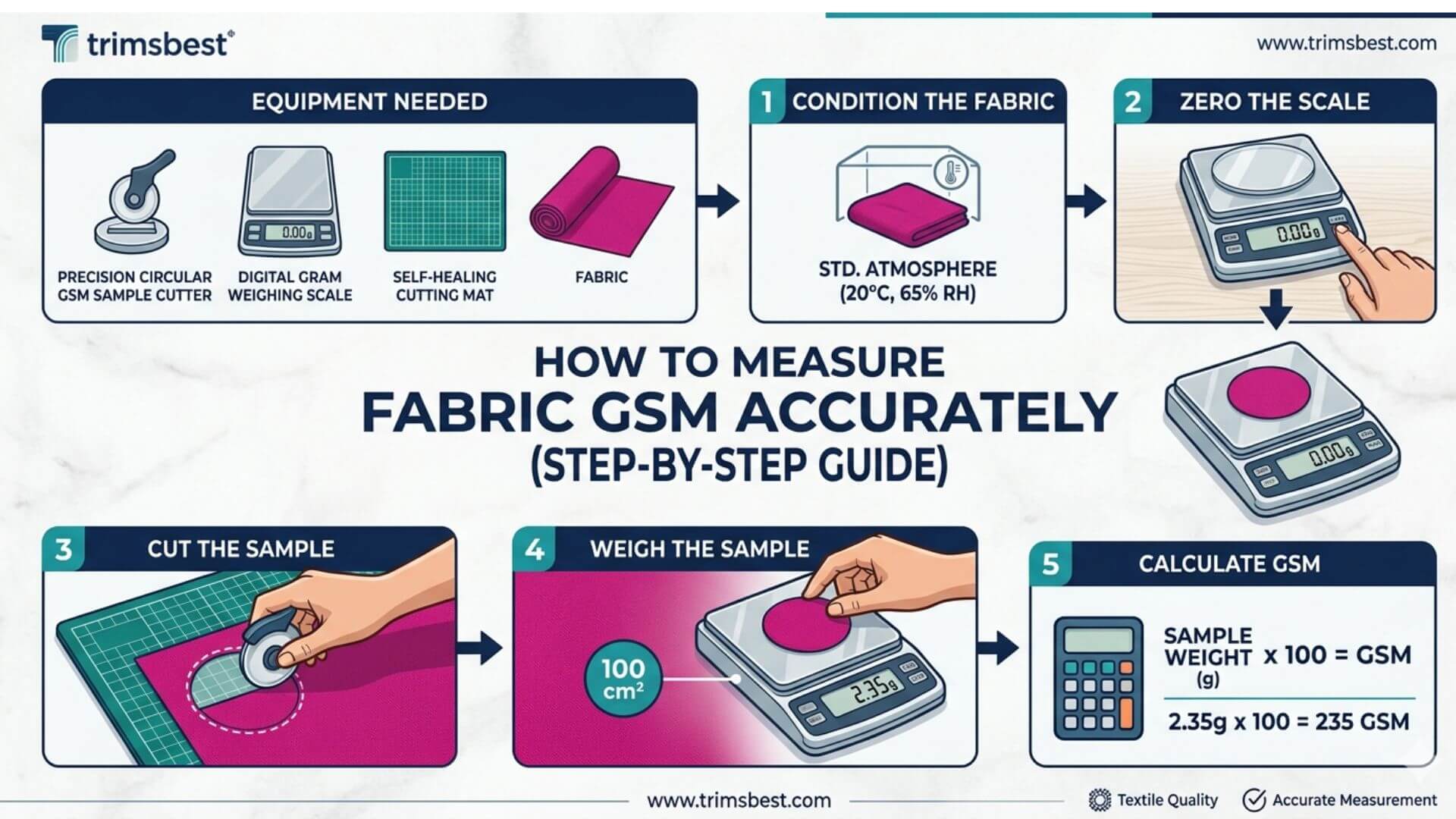


How to Measure Fabric GSM Accurately (Step-by-Step Guide)
How to Measure Fabric GSM Accurately (Complete Guide)
Measure Fabric GSM (grams per square meter) is one of the most important parameters in textile manufacturing. It determines fabric weight, thickness, and quality, making it essential for both production and quality control.
What is Fabric GSM?
GSM stands for grams per square meter and represents the weight of fabric.
Example:
- 120 GSM = lightweight fabric
- 300 GSM = heavy fabric
Why GSM is Important
- Ensures fabric consistency
- Helps maintain quality standards
- Affects garment pricing
- Required for export compliance
Equipment Required
To measure GSM accurately, you need:
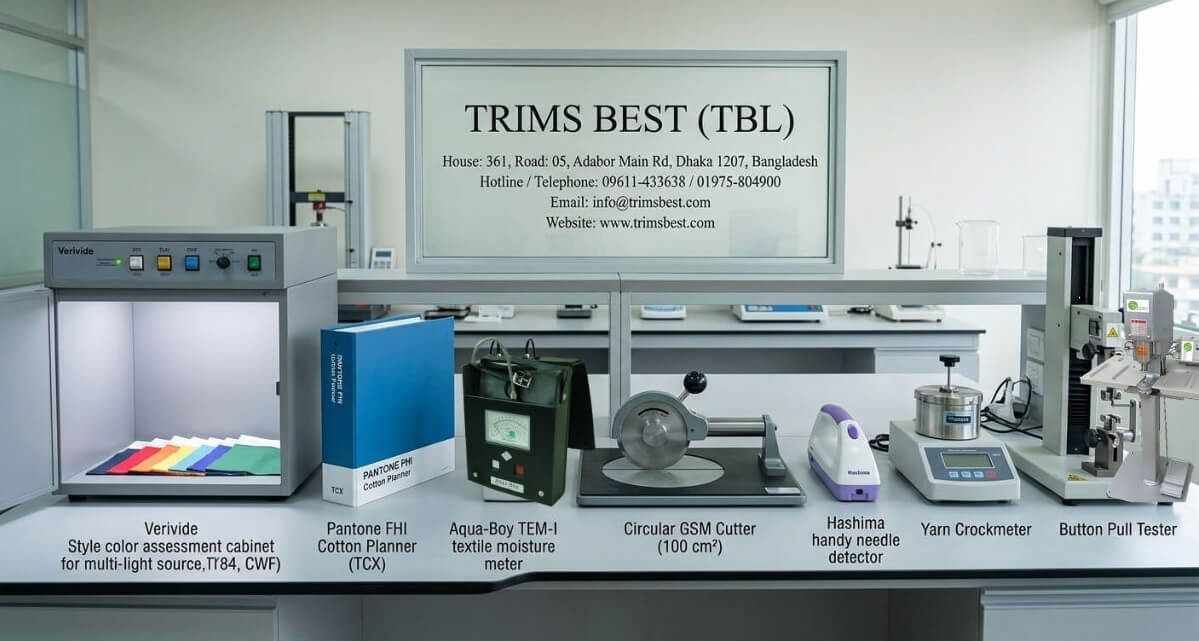
- GSM Cutter
- Digital Weighing Balance
- Fabric Sample
Step-by-Step GSM Measurement Process
Step 1: Sample Preparation
Take a flat, wrinkle-free fabric sample.
Step 2: Cutting
Use GSM cutter to cut a circular sample.
Step 3: Weighing
Place sample on digital balance.
Step 4: Calculation
Multiply weight by factor (depending on cutter size).
Example Calculation
If sample weight = 1.2 grams
Then GSM = 1.2 × 100 = 120 GSM
Common Mistakes to Avoid
- Using uneven samples
- Not calibrating balance
- Incorrect calculations
Applications of GSM Measurement
- Textile production
- Garment manufacturing
- Fabric sourcing
Tips for Accurate Results
- Use calibrated instruments
- Maintain clean workspace
- Take multiple readings
Accurate GSM measurement is critical for ensuring fabric quality and maintaining production standards. Using proper tools and techniques can significantly improve consistency and reduce errors.
Key Factors for Maintaining Accuracy
To achieve professional and repeatable results, always keep these factors in mind:
-
Fabric Conditioning is Critical: Never skip the conditioning phase. Fabrics are hygroscopic and their weight fluctuates based on environmental humidity.
-
Use Precision Tools: A digital scale with 0.01g resolution and a standard GSM circular cutter provide significantly better accuracy than rudimentary methods.
-
Handle Samples with Care: Fingerprints (oils), dirt, or distortion of the cut edges can all introduce minor errors. Use tweezers or clean gloves if necessary.
-
Take Multiple Measurements: For maximum accuracy, especially in industrial quality control, it is best practice to cut and measure multiple samples (e.g., 5 samples) from different areas of the fabric roll (e.g., left, center, right, near the start, and near the end, avoiding selvedges). Average the GSM results.
-
Calibrate Your Equipment Regularly: Periodically calibrate your scale with certified weights and ensure your GSM cutter blade is sharp and cutting clean circles.
👉 Contact Trims Best Ltd. for high-quality GSM cutters and testing equipment.