





Textile Testing Methods Explained | ISO, ASTM & AATCC Guide
Textile Testing Methods Explained (ISO, ASTM & AATCC Guide 2026)
Textile testing is a critical component of the global garment and fabric industry. Whether you are a manufacturer, exporter, quality inspector, or lab technician, understanding textile testing methods ensures product quality, compliance, and customer satisfaction.
In this comprehensive guide, we will explore textile testing methods, major international standards like ISO, ASTM, and AATCC, testing procedures, equipment, and real-world applications.
What is Textile Testing?
Textile testing refers to a series of scientific methods used to evaluate the physical, chemical, and performance properties of fabrics, yarns, and garments.
Why Textile Testing is Important:
- Ensures product quality and durability
- Meets international export standards
- Reduces customer complaints and returns
- Supports brand reputation
- Ensures compliance with regulations (EU, USA)
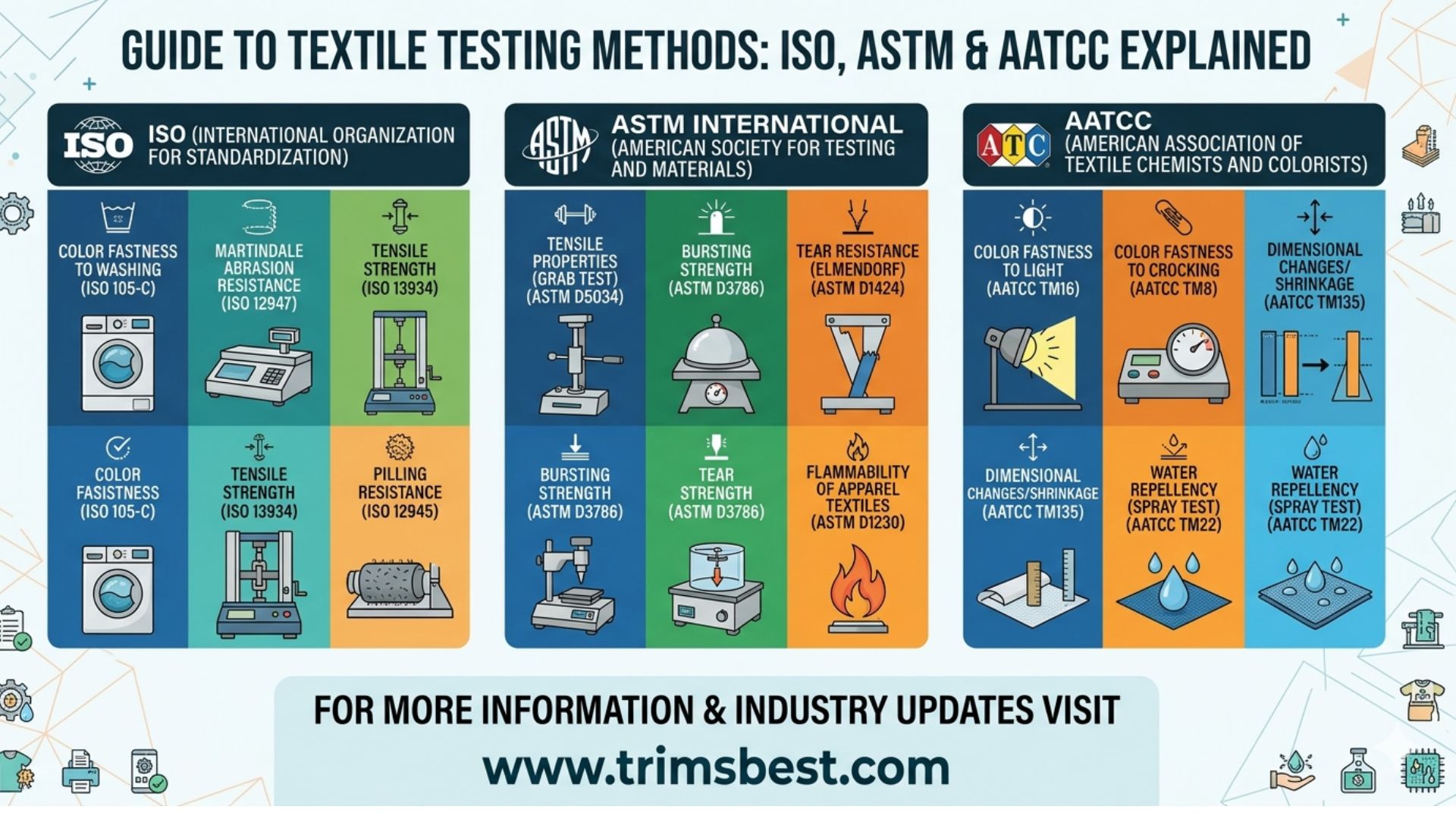
Major Textile Testing Standards
Understanding international standards is essential for global trade.
1. ISO (International Organization for Standardization)
International Organization for Standardization
- Globally accepted standards
- Widely used in Europe and Asia
- Example: ISO 105 (Color fastness)
2. ASTM (American Society for Testing and Materials)
ASTM International
- Popular in the USA
- Covers textile, plastics, metals
- Example: ASTM D5034 (Tensile strength)
3. AATCC (American Association of Textile Chemists and Colorists)
AATCC
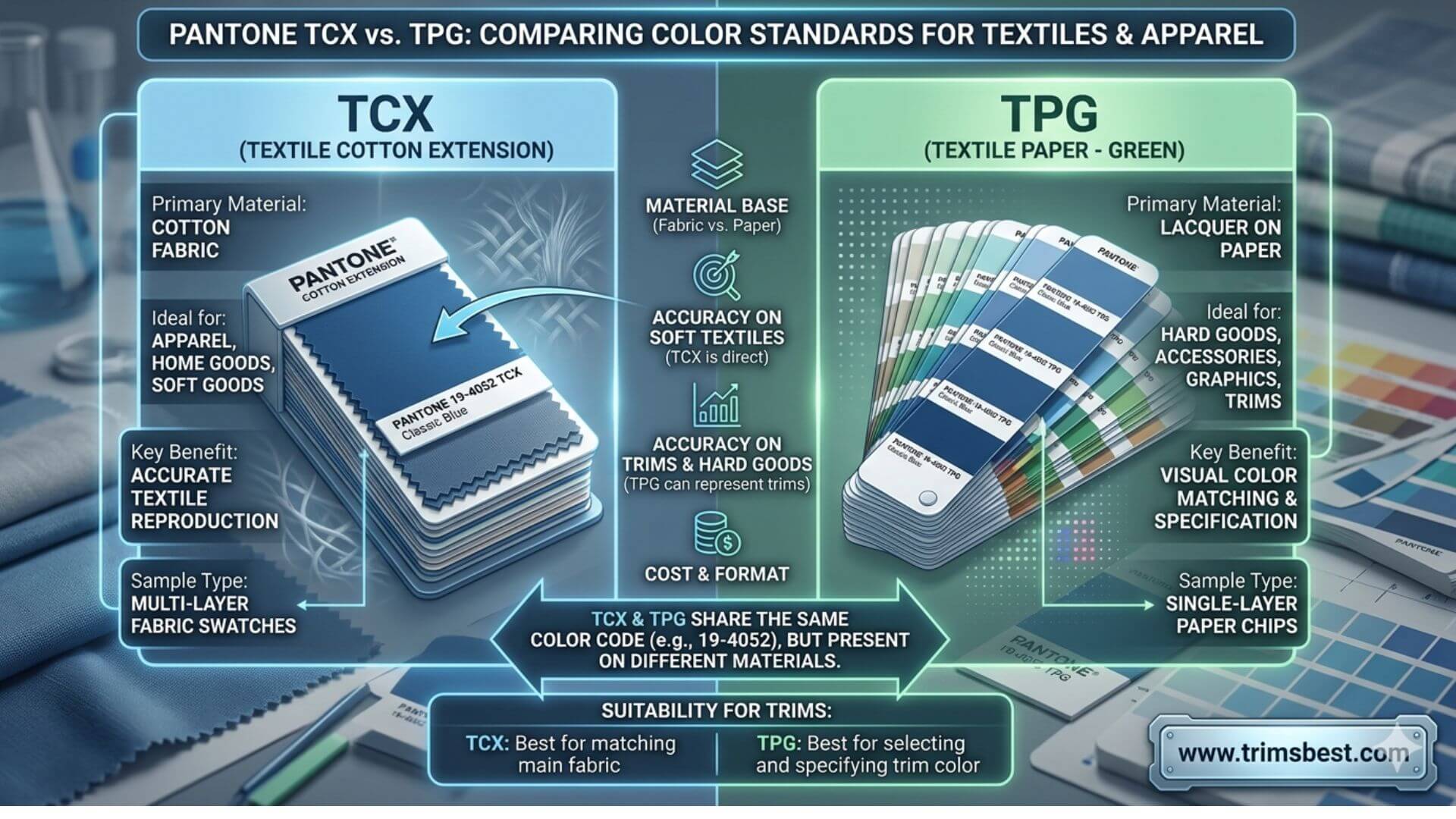
- Specialized in textile chemistry & color testing
- Example: AATCC 61 (Color fastness to washing)
🧵 Types of Textile Testing Methods
Textile testing can be divided into several categories:
Physical Testing of Textiles
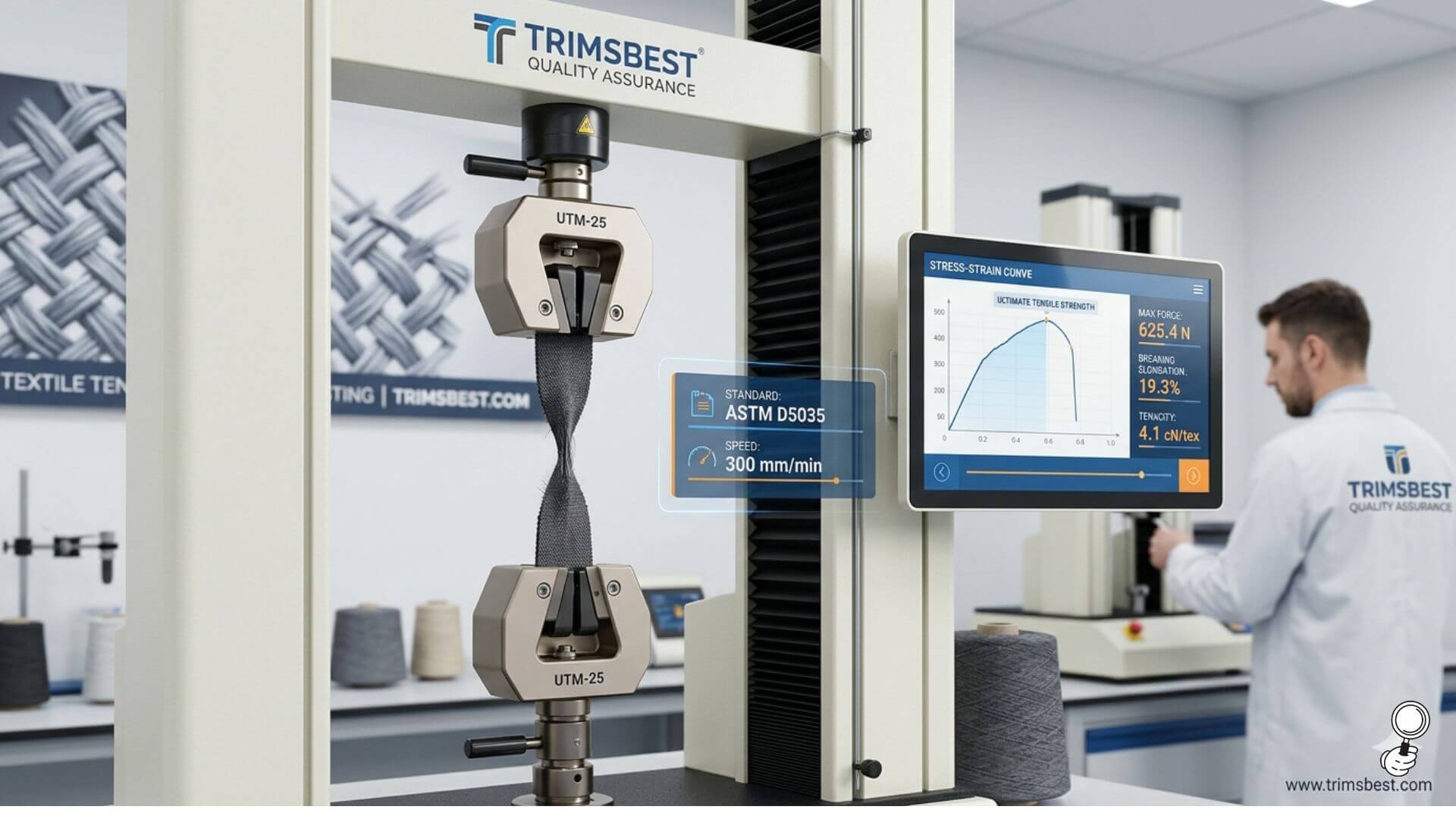
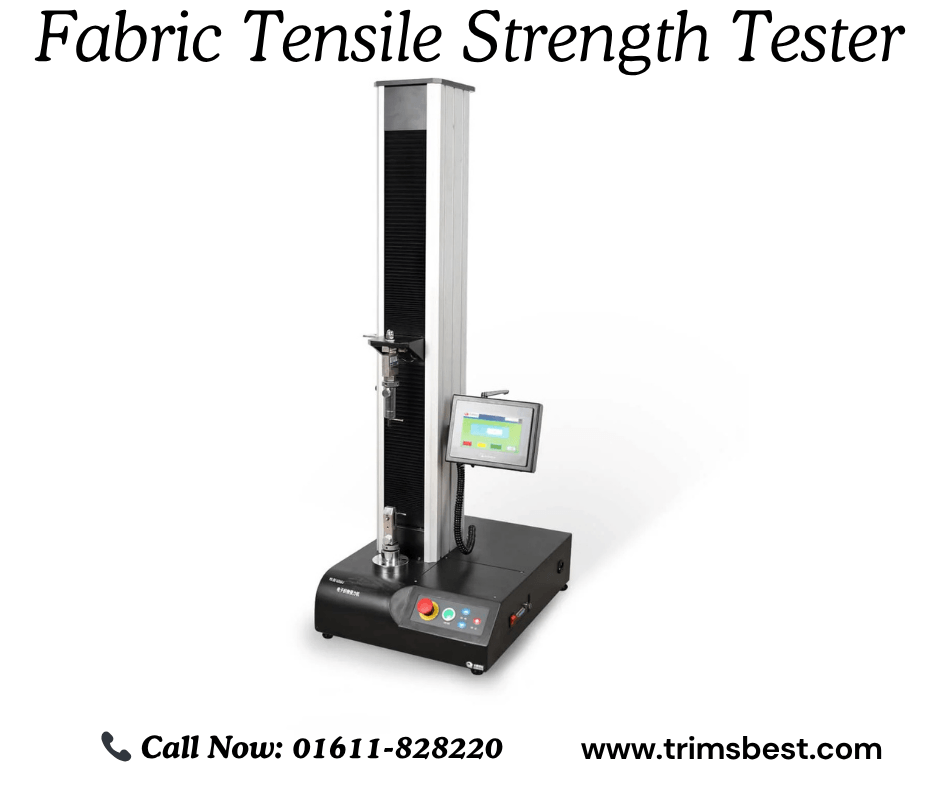
Tensile Strength Test
Measures the force required to break fabric.
- Standards: ASTM D5034, ISO 13934
- Machine: Tensile Strength Tester
- Application: Denim, woven fabrics
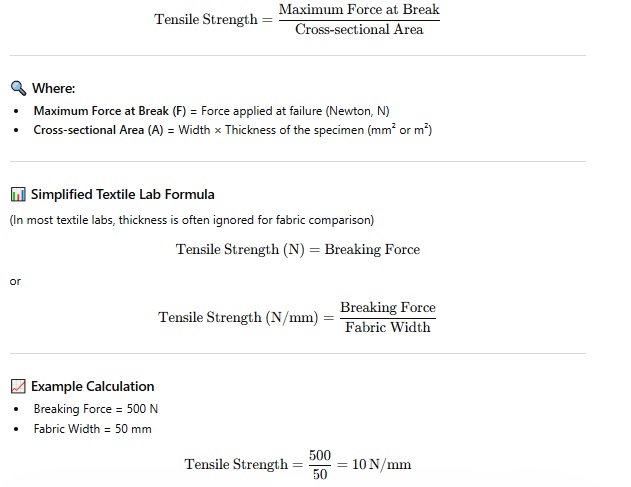
Key Formula:
Tear Strength Test
Determines resistance to tearing.
- Standards: ASTM D1424
- Used for: Workwear, industrial fabrics
Bursting Strength Test
Measures pressure required to rupture fabric.
- Standards: ISO 13938
- Used for: Knitted fabrics
Abrasion Resistance Test (Martindale Test)
Evaluates fabric wear resistance.
- Standard: ISO 12947
- Machine: Martindale Abrasion Tester
Pilling Test
Checks formation of fabric balls.
- Standards: ISO 12945
- Common in: Sweaters, knitwear
Chemical Testing of Textiles
pH Test
Determines acidity or alkalinity of fabric.
- Standard: ISO 3071
- Importance: Skin safety
Formaldehyde Content Test
Detects harmful chemicals.
- Required for export compliance
Azo Dyes Test
Ensures absence of banned dyes (EU regulation)
Color Fastness Testing
Color fastness tests evaluate how well fabric retains color.
Color Fastness to Washing
- Standards: ISO 105-C06, AATCC 61
- Evaluates fading after washing
Color Fastness to Rubbing (Crocking)
- Standard: AATCC 8
- Measures color transfer
Color Fastness to Light
- Standard: ISO 105-B02
- Uses Xenon Arc Lamp
Color Fastness to Perspiration
- Simulates sweat conditions
Dimensional Stability Testing
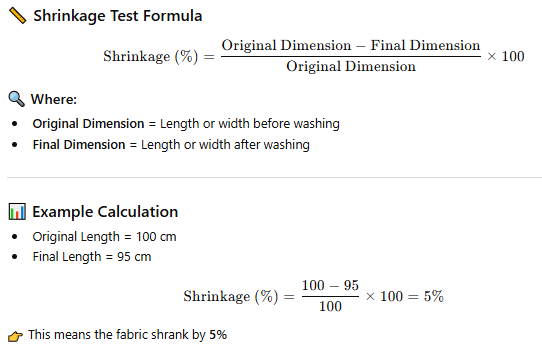
Shrinkage Test
Measures size change after washing.
- Standard: ISO 6330
Formula:
Shrinkage Test Formula
Spirality Test (Knitted Fabric)
Measures fabric twisting after washing.
Comfort & Performance Testing
Air Permeability Test
Measures air flow through fabric.
- Standard: ASTM D737
Moisture Management Test
Evaluates sweat absorption.
Thermal Resistance Test
Measures insulation properties.
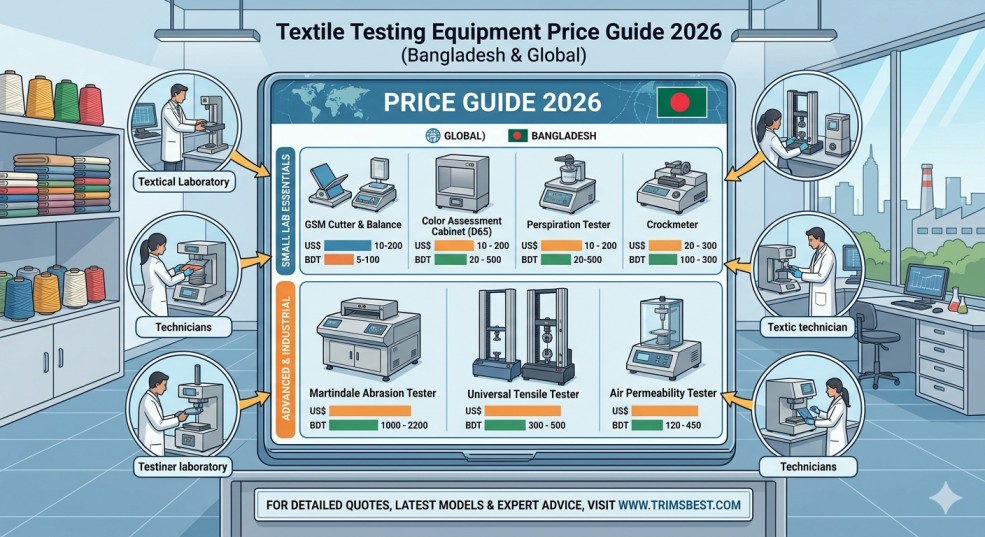
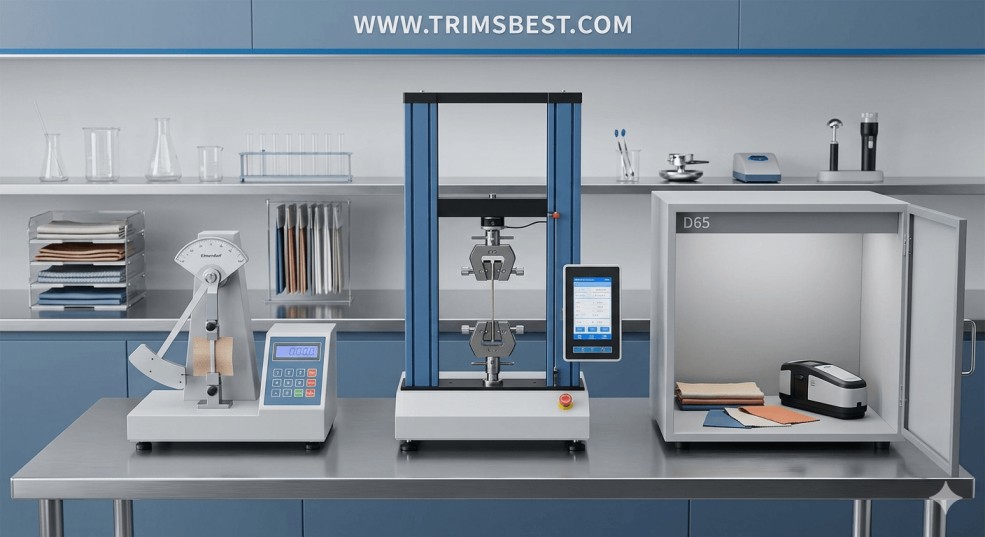
Textile Testing Equipment List
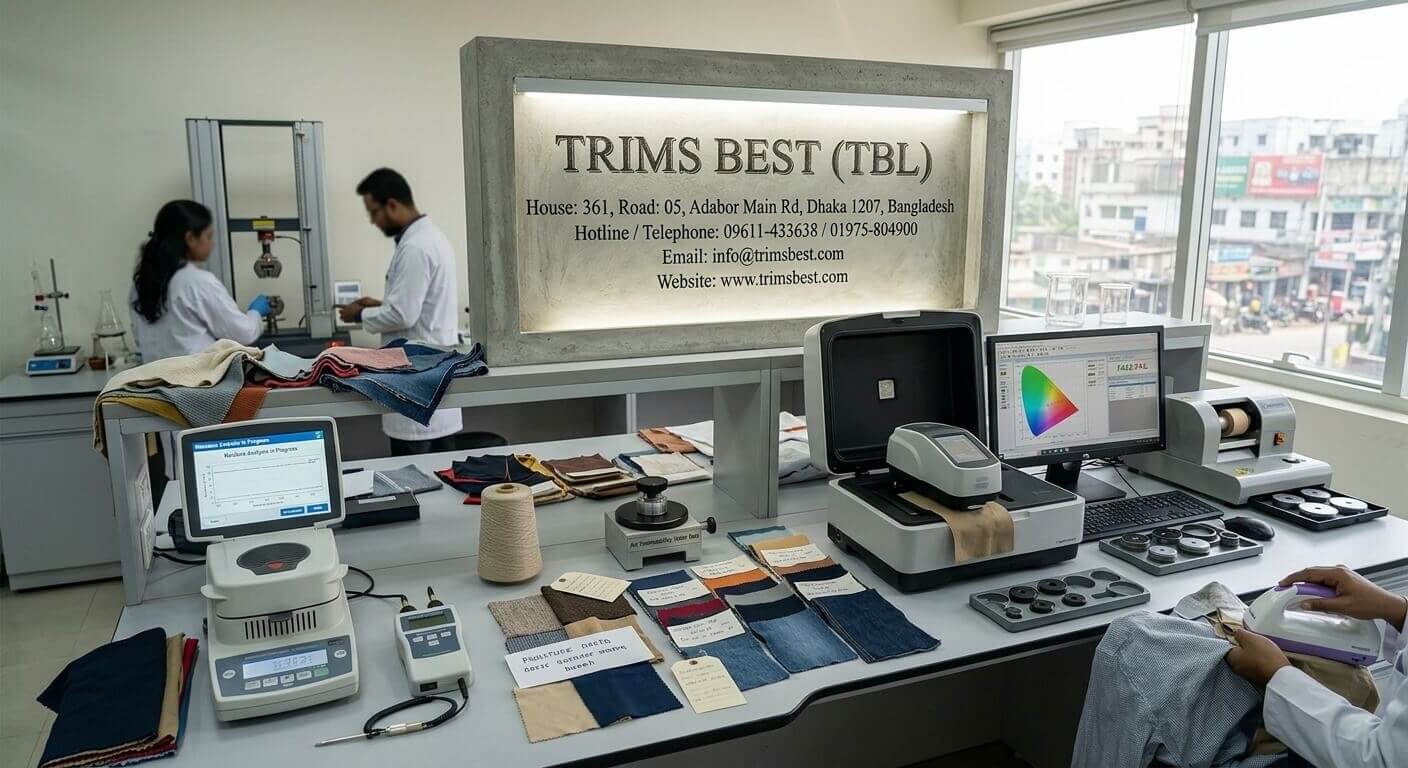
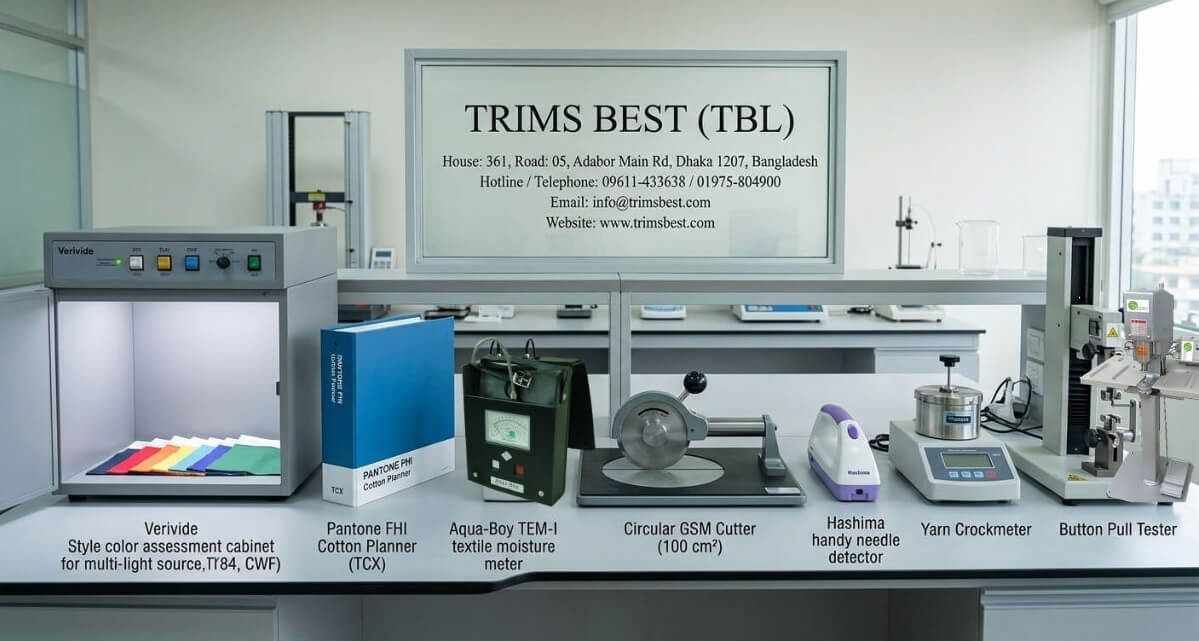
Common laboratory equipment includes:
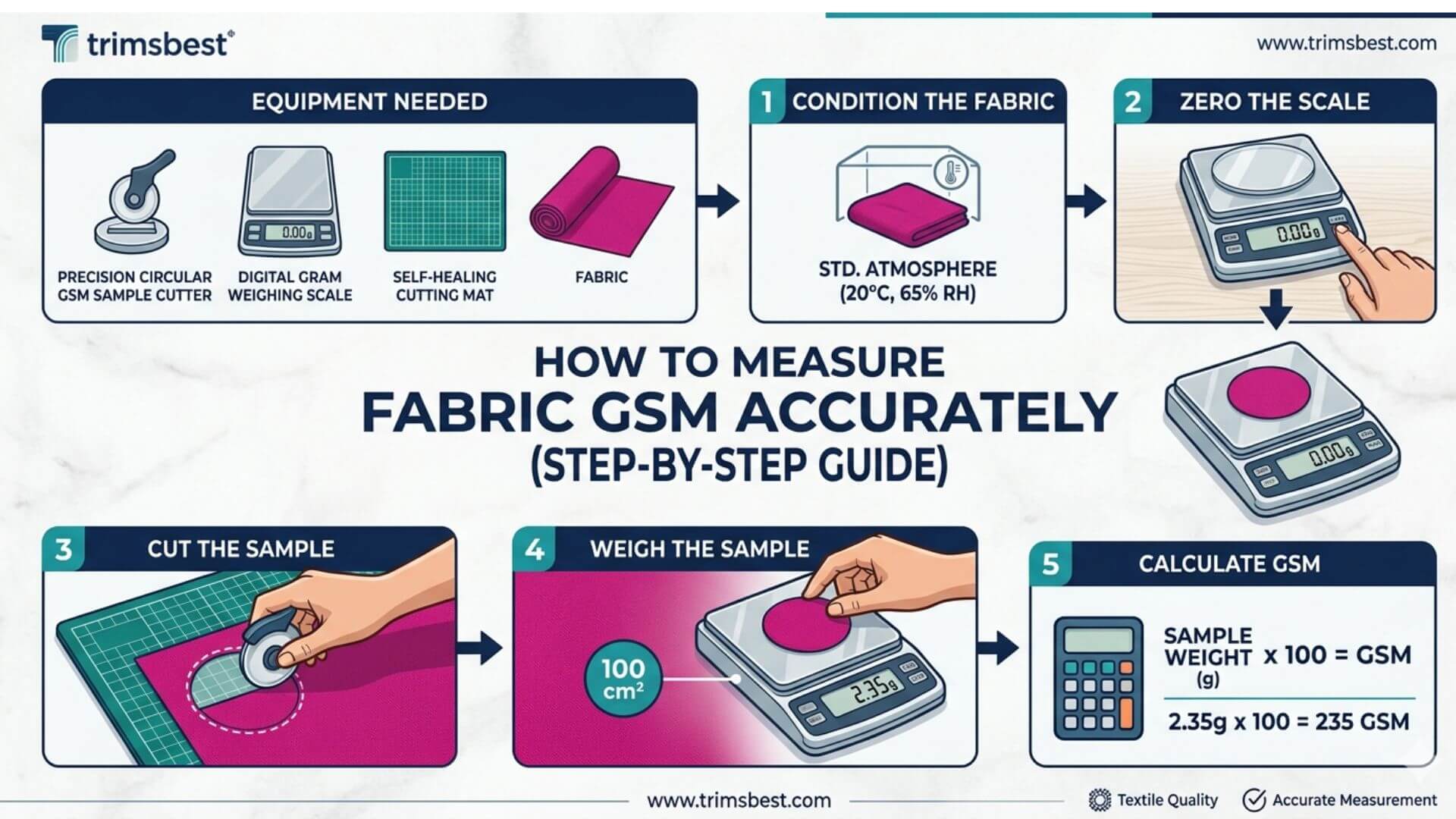
- GSM Cutter
- Weighing Balance
- Tensile Strength Tester
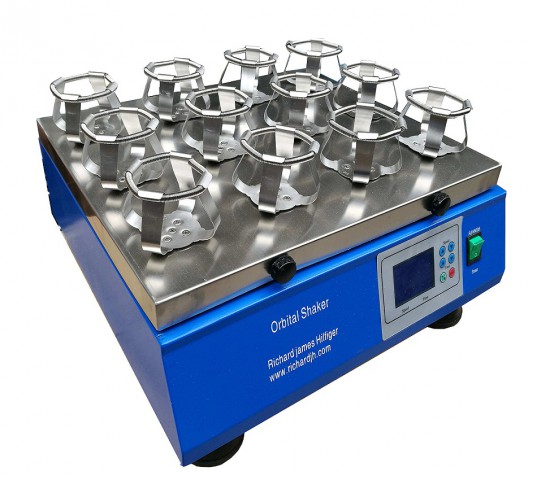
- Martindale Abrasion Tester
- Crock Meter
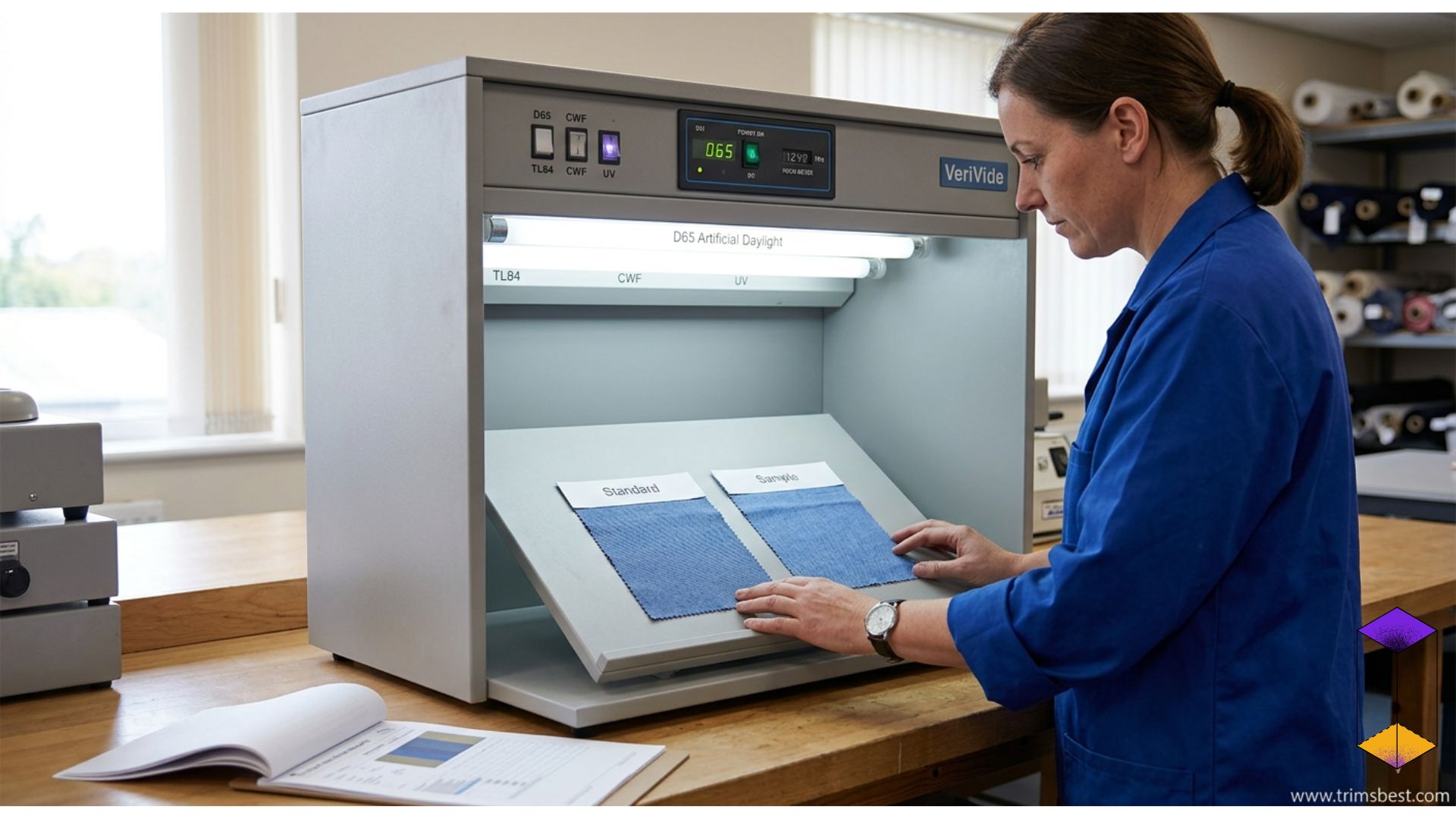
- Color Assessment Cabinet
- Spectrophotometer
- Drying Oven
- pH Meter
Textile Testing Process (Step-by-Step)
Step 1: Sample Collection
- Random sampling from production lot
Step 2: Conditioning
- Standard atmosphere (20°C, 65% RH)
Step 3: Testing
- Perform according to ISO/ASTM methods
Step 4: Data Recording
- Record values carefully
Step 5: Reporting
- Generate test report
ISO vs ASTM vs AATCC (Comparison Table)
| Feature | ISO | ASTM | AATCC |
|---|---|---|---|
| Region | Global | USA | Textile Specific |
| Focus | General standards | Materials testing | Color & chemical |
| Usage | Europe/Asia | USA | Textile labs |
- Benefits of Textile Testing
- Ensures export quality compliance
- Improves product durability
- Reduces returns and complaints
- Enhances brand value
- Meets buyer requirements
Common Mistakes in Textile Testing
- Incorrect sample conditioning
- Using uncalibrated equipment
- Ignoring standard procedures
- Poor data recording
- Lack of trained technicians
Future Trends in Textile Testing (2026)
- AI-based fabric inspection
- Automated testing machines
- Smart textile testing
- Digital reporting systems
- Sustainable testing methods
Textile testing is the backbone of quality assurance in the garment industry. By following internationally recognized standards like International Organization for Standardization, ASTM International, and AATCC, manufacturers can ensure product reliability and global acceptance.
Whether you are setting up a textile lab or improving your testing procedures, mastering these methods will give you a competitive advantage in 2026 and beyond.