

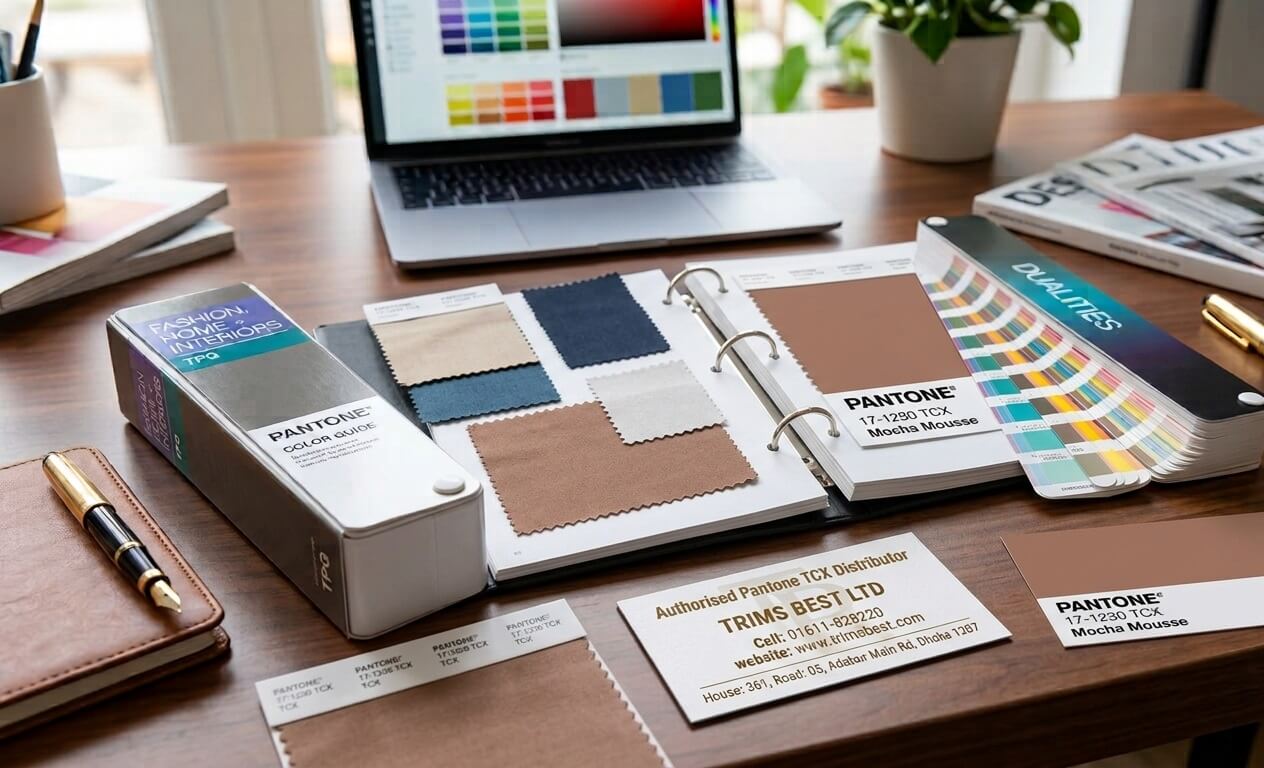
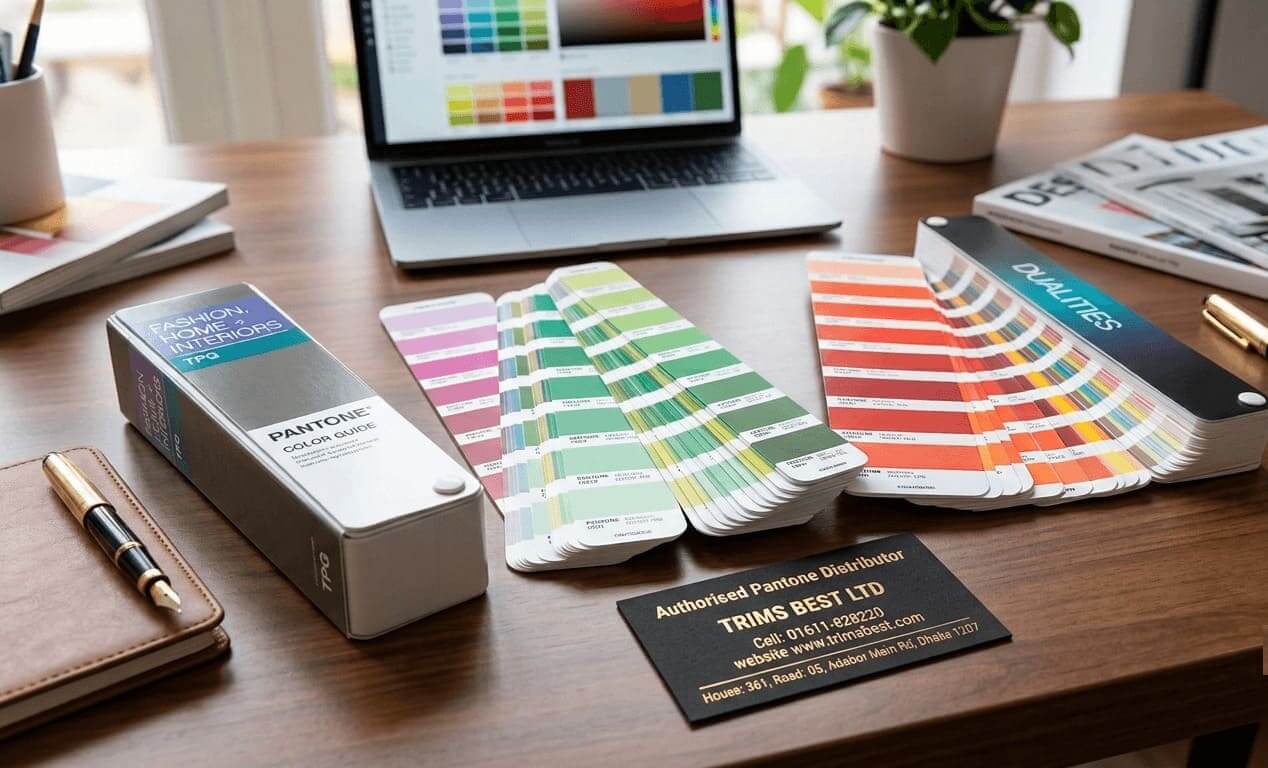




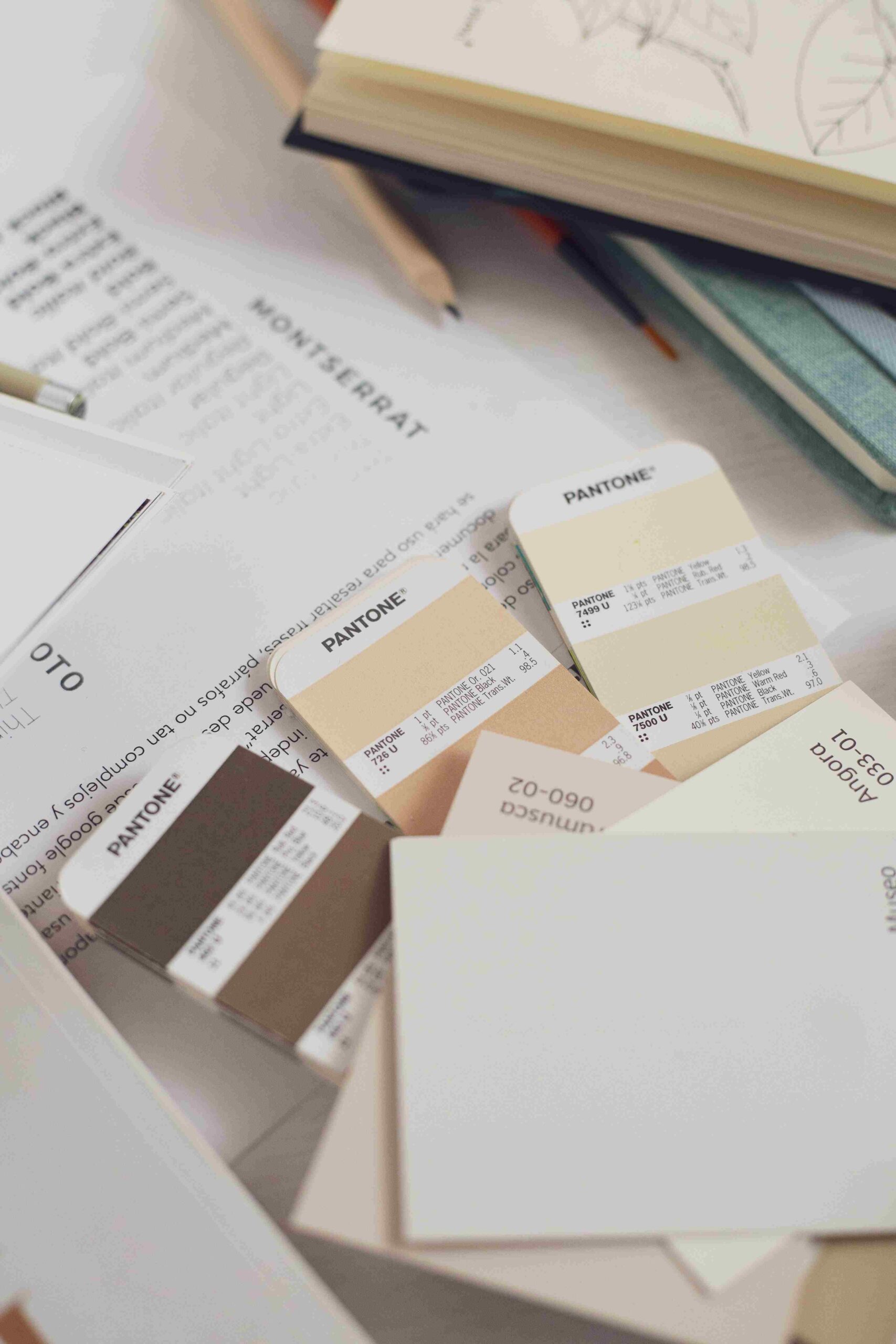
Pantone TPG Price in Bangladesh ranges from BDT 24,000–40,000.
Pantone TPG Price Guide in Bangladesh: Complete Buying Guide for the Garment & Textile Industry
In Bangladesh’s thriving garment and textile sector, accurate color communication is essential. Whether you are a fashion designer, textile engineer, merchandiser, dyeing specialist, quality controller, or garment exporter, using an original Pantone color guide helps ensure consistent color matching from product development to final production. One of the most frequently searched topics among textile professionals is the Pantone TPG Price Guide in Bangladesh. Since Pantone products are imported, their prices can vary depending on exchange rates, import duties, shipping costs, and supplier availability. Understanding these factors before purchasing helps businesses choose the right guide while avoiding counterfeit products.
Pantone’s Textile Paper – Green (TPG) series is designed specifically for the Fashion, Home + Interiors (FHI) color system. Compared to older TPX editions, TPG guides use an environmentally friendly coating free of lead and chromium while maintaining consistent color accuracy. These guides are trusted by international brands, apparel manufacturers, textile mills, and home furnishing companies worldwide.
For businesses in Bangladesh, investing in a genuine Pantone guide is more than just buying a color book. It supports:
- Accurate communication between buyers and suppliers
- Faster approval of lab dips and production samples
- Reduced shade variation during dyeing
- Better compliance with international buyer requirements
- Lower production costs caused by color mismatches
This comprehensive guide explains the latest Pantone TPG products, estimated prices in Bangladesh, model comparisons, buying advice, and practical tips to help you choose the right guide for your business.
Why Pantone Matters in Bangladesh
Bangladesh is one of the world’s largest exporters of ready-made garments, knitwear, woven apparel, sweaters, denim, and home textiles. Most international buyers specify Pantone color references during product development to ensure consistent color standards across factories and production runs.
Using unofficial or outdated color guides can lead to:
- Buyer rejection due to incorrect shades
- Costly re-dyeing and production delays
- Increased fabric waste
- Failed quality inspections
- Communication errors between design, merchandising, and production teams
Original Pantone guides help minimize these risks by providing globally recognized color references.
Who Should Use Pantone TPG?
Pantone TPG guides are suitable for professionals and organizations involved in:
- Garment manufacturing
- Knitwear production
- Woven apparel manufacturing
- Sweater factories
- Textile dyeing and finishing
- Fabric sourcing
- Fashion design
- Home textile manufacturing
- Interior design
- Product development
- Printing and packaging (where textile color references are required)
- Quality assurance and laboratory testing
Whether you manage a small apparel business or a large export-oriented factory, a genuine Pantone guide improves communication and consistency throughout the production process.
What You Will Learn in This Guide
This article covers:
- What Pantone TPG is and how it differs from other Pantone systems
- The latest Pantone Fashion, Home + Interiors products
- Estimated Pantone TPG prices in Bangladesh
- Factors that influence local pricing
- How to identify genuine Pantone guides
- Which Pantone model is best for your application
- Common mistakes buyers make when purchasing Pantone products
- Frequently asked questions from Bangladeshi textile professionals
What is Pantone TPG? Complete Guide to the Pantone Fashion, Home + Interiors (FHI) Color System
What is Pantone TPG?
Pantone TPG (Textile Paper – Green) is a professional color reference system developed by Pantone for the Fashion, Home + Interiors (FHI) industry. It provides standardized paper-based color swatches that help designers, manufacturers, suppliers, and buyers communicate color accurately throughout product development and production.
Unlike ordinary printed color charts, Pantone TPG guides are manufactured under strict quality standards to ensure that every color is reproduced consistently. This makes them a trusted reference for fashion brands, textile mills, apparel exporters, interior designers, and product developers around the world.
The “Green” in Textile Paper – Green refers to the environmentally improved paper coating used in the guide. Compared with the older TPX system, TPG guides are produced without lead and chromium in the coating process, making them a more environmentally responsible option while maintaining reliable color accuracy.
Today, Pantone TPG is widely used in Bangladesh’s export-oriented garment industry because international buyers frequently specify Pantone color references during product development and approval.
Why Pantone TPG is Important for Bangladesh’s Garment Industry
Bangladesh is one of the world’s leading exporters of:
- Knitwear
- Woven garments
- Sweaters
- Denim apparel
- Home textiles
- Sportswear
- Children’s wear
- Fashion accessories
Global buyers expect color consistency regardless of where a product is manufactured. A buyer in Europe or North America may specify a Pantone color for a fabric, and factories in Bangladesh are expected to reproduce that exact shade.
Using Pantone TPG helps ensure:
- Consistent color communication between buyer and supplier
- Accurate laboratory dye development
- Faster sample approvals
- Fewer production delays due to color corrections
- Reduced material waste
- Better compliance with customer specifications
Without a standardized color reference, even small differences in printed samples or digital displays can lead to misunderstandings and costly production issues.
How Pantone TPG Works
Each Pantone TPG color is assigned a unique identification code, allowing everyone involved in the supply chain to refer to the same color standard.
For example:
- A fashion designer selects a Pantone TPG color.
- The merchandising team communicates the code to the textile mill.
- The dyeing laboratory develops a lab dip based on that reference.
- Quality control compares the finished fabric with the official Pantone guide.
- The buyer reviews the approved sample using the same standardized reference.
This standardized process helps eliminate confusion caused by subjective color descriptions such as “light blue” or “dark green.”
What Does “TPG” Mean?
The abbreviation TPG stands for:
- T – Textile
- P – Paper
- G – Green
This indicates that the guide is:
- Designed primarily for textile and fashion applications.
- Printed on specially coated paper.
- Produced using an environmentally improved coating process.
Evolution of Pantone Textile Color Systems
Pantone has continuously improved its textile color systems to meet the changing needs of the fashion industry.
1. TPX (Textile Paper eXtended)
The TPX series was widely used for many years and served as the standard paper-based reference for textile colors. Although still found in some workplaces, it has largely been replaced by TPG.
2. TPG (Textile Paper – Green)
TPG introduced an updated coating process that eliminated lead and chromium while maintaining compatibility with the Fashion, Home + Interiors color system. It became the preferred paper guide for many designers and manufacturers.
3. TCX (Textile Cotton System)
TCX uses dyed cotton fabric rather than printed paper. Because textile colors can appear different on paper and fabric, TCX is commonly used when physical fabric representation is required, particularly for dyeing, knitting, and apparel production.
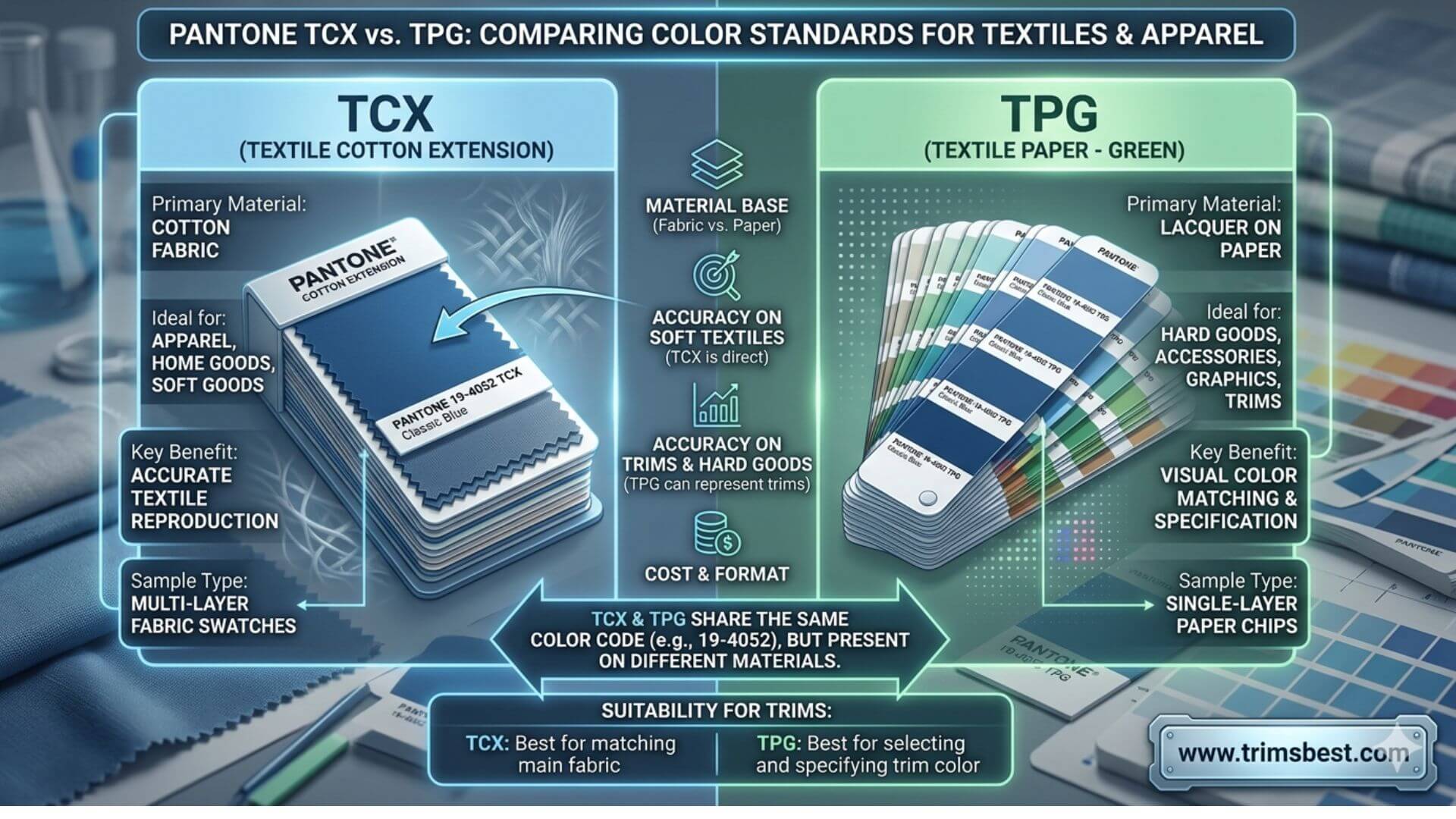
Difference Between TPG and TCX
Many professionals ask whether they should purchase TPG or TCX. The answer depends on how the guide will be used.
| Feature | Pantone TPG | Pantone TCX |
|---|---|---|
| Material | Printed paper | Dyed cotton fabric |
| Best For | Design, product development, presentations | Textile production and dyeing |
| Portability | Lightweight and easy to carry | Heavier due to fabric swatches |
| Color Medium | Paper | Cotton |
| Cost | Generally lower | Generally higher |
| Typical Users | Fashion designers, merchandisers | Textile mills, dye houses, laboratories |
If your primary work involves designing garments, preparing buyer presentations, or selecting color palettes, a TPG guide is often sufficient. If you need to evaluate how colors appear on fabric, a Pantone TCX guide is usually the better choice.
Pantone TPG vs TPX
Although some factories still use TPX guides, Pantone recommends using TPG because of its updated manufacturing process and environmental improvements.
| Feature | TPX | TPG |
|---|---|---|
| Environmental Coating | Older formulation | Lead- and chromium-free coating |
| Availability | Limited | Current standard |
| New Color Updates | No | Yes |
| Industry Recommendation | Legacy | Recommended for new purchases |
Organizations replacing old guides should consider upgrading to the latest TPG editions to maintain compatibility with current Pantone references.
Common Applications of Pantone TPG
Pantone TPG is widely used in:
Garment Manufacturing
Design teams use TPG guides to specify colors for apparel collections before production begins.
Textile Dyeing
Laboratories reference Pantone colors when preparing lab dips and production dye recipes.
Fashion Design
Designers develop seasonal color palettes and communicate them consistently with suppliers.
Home Textiles
Manufacturers of curtains, bedding, upholstery, and decorative fabrics rely on Pantone references for coordinated color schemes.
Interior Design
TPG guides help match colors across textiles, furnishings, and decorative products.
Product Development
Consumer goods manufacturers use standardized colors to maintain brand consistency across product lines.
Benefits of Using an Original Pantone TPG Guide
Purchasing a genuine Pantone guide offers several practical advantages:
- Reliable color consistency
- Internationally recognized color standards
- Better communication with overseas buyers
- Faster approval of samples
- Reduced production errors
- Improved quality control
- Long-term cost savings by minimizing color-related rework
Can Digital Colors Replace Pantone TPG?
Many designers use digital software for color selection, but screen colors vary depending on monitor calibration, brightness, and display technology. A Pantone TPG guide provides a physical reference that reduces these variations and helps ensure everyone evaluates the same color standard.
For this reason, many buyers and suppliers continue to rely on physical Pantone guides even when digital design tools are used.
Key Takeaways
- Pantone TPG is the modern paper-based color system for the Fashion, Home + Interiors industry.
- It uses an environmentally improved coating process compared with the older TPX system.
- TPG is ideal for design, merchandising, product development, and color communication.
- TCX remains the preferred choice when evaluating colors directly on cotton fabric.
- Using original Pantone guides helps Bangladeshi garment and textile businesses improve color accuracy, reduce production issues, and meet international buyer expectations.
Latest Pantone FHI Models (2026) – Complete Model Guide for Bangladesh
Last Updated: July 2026
Choosing the right Pantone guide is one of the most important decisions for textile manufacturers, fashion designers, buying houses, and garment exporters in Bangladesh. Pantone offers several Fashion, Home + Interiors (FHI) products, each designed for a specific stage of the color development process.
The latest FHI system includes 2,625 standardized colors, including 315 newly added colors in the latest edition, making it the most comprehensive Pantone textile color library currently available.
Complete Pantone FHI Product Line
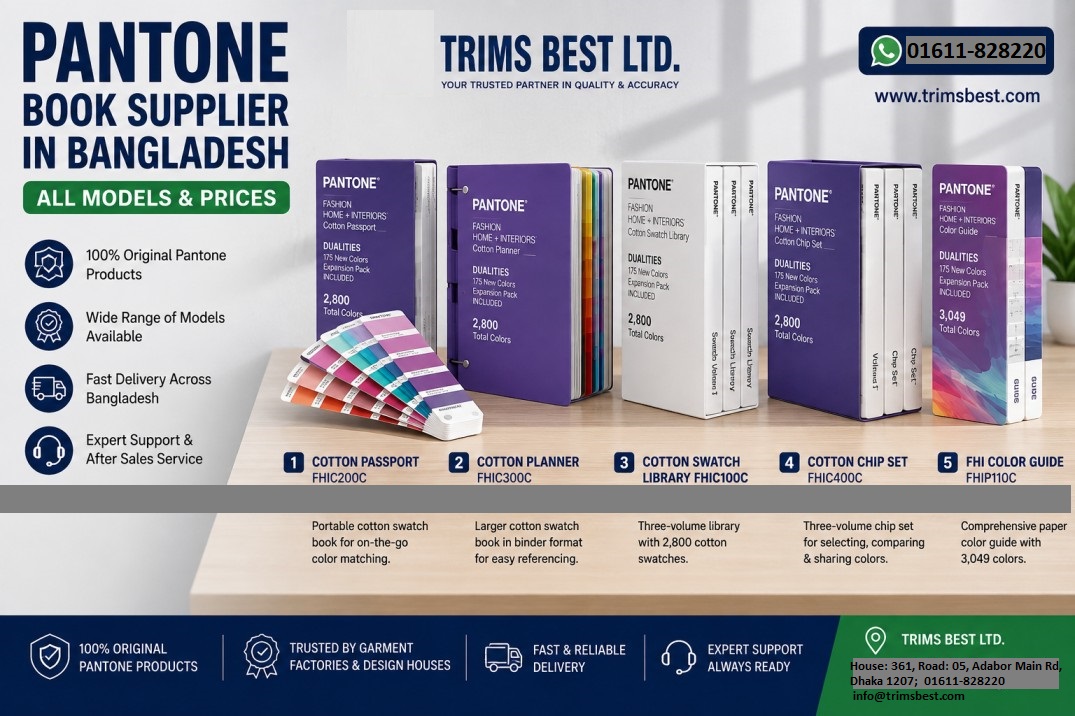
| Model | Product Name | Medium | Best For |
|---|---|---|---|
| FHIP110A | Fashion, Home + Interiors Color Guide | Paper | Fashion designers, merchandisers |
| FHIP110C | FHI Color Guide + Dualities Expansion Pack | Paper | Users needing the newest colors |
| FHIP110COY26 | Limited Edition Color Guide | Paper | Collectors, trend forecasting |
| FHIP230N | Color Specifier & Guide Set (Former Edition) | Paper | Product development |
| FHIC200 Series | Cotton Passport | Cotton Fabric | Textile mills |
| FHIC300 Series | Cotton Planner | Cotton Fabric | Large factories |
| FHIC400 Series | Cotton Chip Set | Cotton Fabric | Sample development |
| Cotton Swatch Library | Complete Cotton Library | Cotton Fabric | Laboratories |
| Polyester Swatch Book | Polyester Color Guide | Polyester | Polyester fabrics |
| Nylon Brights Set | Nylon Brights Collection | Nylon | Sportswear |
1. Pantone FHIP110A – Fashion, Home + Interiors Color Guide
This is the most popular Pantone guide used throughout Bangladesh’s garment industry.
It is designed for professionals who require a portable paper-based reference for selecting and communicating colors during product development.
Key Features
- Contains 2,625 Pantone FHI colors
- Includes 315 newly introduced colors
- Portable two-volume fan deck
- Printed on environmentally friendly paper
- Lead- and chromium-free coating
- Organized by color family for faster color selection
- Suitable for hard goods and textile-inspired design work
Best For
- Fashion Designers
- Buying Houses
- Merchandisers
- Product Developers
- Home Textile Designers
- Leather Goods Manufacturers
Advantages
✔ Lightweight
✔ Easy to carry
✔ Quick color comparison
✔ Internationally accepted
✔ Excellent for buyer meetings
2. Pantone FHIP110C – Color Guide + Dualities Expansion Pack
Pantone has expanded its FHI system with the Dualities Expansion Pack, adding 175 new monochromatic and pastel colors to help designers work with contemporary color trends.
New Features
- Original FHI Color Guide
- Additional 175 new colors
- Expanded pastel palette
- Expanded neutral palette
- Trend-focused colors
Recommended For
- Premium Fashion Brands
- Interior Designers
- Color Consultants
- Product Development Teams
If you want the newest Pantone colors available today, this is one of the best choices.
3. Pantone FHIP110COY26 – Limited Edition
Pantone also released a limited edition version celebrating the 2026 Color of the Year, combining the standard guide with a commemorative presentation.
This edition is primarily intended for:
- Fashion trend agencies
- Design studios
- Educational institutions
- Collectors
- Creative professionals
For most garment factories, the standard FHIP110A or FHIP110C remains the more practical choice.
4. Pantone FHIP230N – Color Specifier & Guide Set
Although now considered a former edition, many organizations in Bangladesh still use this model because it includes detachable paper chips.
Features
- Fan guides
- Tear-out paper chips
- Color specification pages
- Color communication sheets
- Organized color libraries
Ideal Users
- Sampling Departments
- Product Development
- Buyer Approval Teams
- Design Studios
Because removable chips can be attached to specification sheets, this product is particularly useful when communicating colors with suppliers.
5. Pantone Cotton Passport
Unlike paper guides, the Cotton Passport displays colors on dyed cotton fabric.
This provides a more realistic representation of how colors appear on textiles.
Features
- Dyed cotton swatches
- Compact format
- Portable
- Suitable for fabric matching
- High color accuracy
Best For
- Dye Houses
- Textile Mills
- Knitting Factories
- Fabric Suppliers
6. Pantone Cotton Planner
The Cotton Planner is designed for organizations handling large volumes of color approvals.
Each color is presented on larger cotton swatches, making evaluation easier under controlled lighting conditions.
Recommended For
- Export Garment Factories
- Textile Laboratories
- Quality Assurance Departments
- Color Approval Teams
7. Pantone Cotton Chip Set
The Cotton Chip Set contains removable cotton chips that simplify communication between design and production teams.
Common Applications
- Lab Dip Development
- Buyer Approvals
- Product Sampling
- Fabric Development
- Color Specification Sheets
Because chips can be removed and attached to documents, they are frequently used during sample approval.
8. Cotton Swatch Library
The Cotton Swatch Library is Pantone’s most comprehensive textile color reference.
It includes every available FHI cotton color organized in durable binders.
Used By
- International Brands
- Global Buying Offices
- Textile Research Centers
- Large Dye Houses
This library is often chosen by organizations managing thousands of color approvals each year.
9. Polyester Swatch Book
Not all textiles are cotton.
Pantone developed the Polyester Swatch Book specifically for synthetic fabrics where color behavior differs from cotton.
Suitable For
- Polyester Fabric Mills
- Sportswear Manufacturers
- Activewear Brands
- Uniform Manufacturers
10. Nylon Brights Set
The Nylon Brights collection contains 21 fluorescent nylon colors, developed for products that require vivid, high-visibility shades.
Common applications include:
- Sportswear
- Performance Apparel
- Outdoor Equipment
- Fashion Accessories
- Safety Products
Which Pantone Guide Should You Buy?
The answer depends on your business.
Fashion Designers
Recommended:
✅ FHIP110A
Garment Factories
Recommended:
✅ Cotton Passport
✅ Cotton Planner
Textile Laboratories
Recommended:
✅ Cotton Swatch Library
Buying Houses
Recommended:
✅ FHIP110A
✅ Color Specifier
Interior Designers
Recommended:
✅ FHIP110C
Product Developers
Recommended:
✅ Color Specifier & Guide Set
Quick Comparison
| Product | Portability | Accuracy on Fabric | Best For |
|---|---|---|---|
| FHIP110A | ⭐⭐⭐⭐⭐ | ⭐⭐⭐ | Design & merchandising |
| Cotton Passport | ⭐⭐⭐⭐ | ⭐⭐⭐⭐⭐ | Textile production |
| Cotton Planner | ⭐⭐⭐ | ⭐⭐⭐⭐⭐ | Quality control |
| Cotton Chip Set | ⭐⭐⭐ | ⭐⭐⭐⭐⭐ | Sampling |
| Swatch Library | ⭐ | ⭐⭐⭐⭐⭐ | Large organizations |
Expert Recommendation for Bangladesh
If you are purchasing your first Pantone guide, the FHIP110A Fashion, Home + Interiors Color Guide offers the best balance of portability, usability, and value for most fashion designers, merchandisers, and buying offices. Textile mills and dyeing laboratories that evaluate colors directly on fabric should consider the Cotton Passport or Cotton Planner instead, as these provide dyed cotton references that more closely reflect production conditions.
Pantone TPG Price in Bangladesh (2026) – Updated Price Guide, Buying Tips & Market Analysis
Last Updated: July 2026
One of the most common questions from fashion designers, buying houses, textile engineers, garment manufacturers, and quality assurance professionals is:
“What is the latest Pantone TPG price in Bangladesh?”
Unlike many office supplies, Pantone products are not manufactured locally. They are imported from overseas, so prices in Bangladesh vary depending on several factors, including international pricing, exchange rates, shipping costs, customs duties, VAT, and supplier margins.
This section provides an estimated overview of the Bangladeshi market to help you budget for an original Pantone guide. Prices are indicative and may vary between authorized distributors and importers.
Estimated Pantone TPG Price in Bangladesh (2026)
| Pantone Product | Approximate Price (BDT) | Best For | Pantone FHIP110A Color Guide | ৳24,000 – ৳40,000 | Fashion designers, merchandisers | Pantone FHIP110C Color Guide + Expansion | ৳38,000 – ৳48,000 | Updated color collections | Pantone FHIP230N Color Specifier & Guide Set* | ৳85,000 – ৳120,000 | Product development | Cotton Passport | ৳70,000 – ৳95,000 | Textile mills | Cotton Planner | ৳190,000 – ৳320,000 | Large factories | Cotton Chip Set | ৳230,000 – ৳380,000 | Sampling & approvals | Cotton Swatch Library | ৳850,000+ | Corporate color libraries | Polyester Swatch Book | ৳55,000 – ৳80,000 | Polyester textile production | Nylon Brights Set | ৳25,000 – ৳40,000 | Sportswear & specialty textiles |
|---|
*The FHIP230N is a former edition that may still be available from some suppliers.
Important: These prices are estimates for the Bangladesh market. Always request a formal quotation before placing an order.
Why Are Pantone Guides Expensive in Bangladesh?
Many first-time buyers are surprised by the price of Pantone products. Several factors contribute to the higher retail cost.
1. Imported Products
Pantone products are manufactured outside Bangladesh and imported by distributors or specialized suppliers. Freight, insurance, and handling charges increase the final selling price.
2. Currency Exchange Rate
Pantone products are generally priced in US dollars. Any change in the USD-to-BDT exchange rate directly affects local pricing.
For example:
- Higher USD value → Higher Pantone price in Bangladesh
- Lower USD value → Potentially lower import cost
3. Customs Duty and Taxes
Imported products may be subject to:
- Customs duty
- Import VAT
- Advance tax (where applicable)
- Customs clearance charges
- Port handling fees
These costs are reflected in the final retail price.
4. International Shipping
Because Pantone guides are premium printed products, suppliers often use reliable international courier services to reduce the risk of damage during transportation.
Shipping costs increase with:
- Product weight
- Delivery speed
- Insurance
- Import volume
5. Limited Demand
Unlike office stationery, Pantone guides are purchased by a specialized market.
Typical buyers include:
- Garment factories
- Buying houses
- Textile laboratories
- Universities
- Fashion institutes
- Product development teams
Because annual demand is relatively limited, suppliers cannot benefit from large-volume economies of scale.
Is Buying an Original Pantone Guide Worth the Investment?
For companies involved in export-oriented manufacturing, the answer is generally yes.
Although the initial investment is significant, an original guide can help reduce:
- Color approval delays
- Rejected samples
- Incorrect lab dips
- Fabric shade variation
- Production rework
- Buyer complaints
Even one avoided production error can offset much of the cost of the guide.
Original Pantone vs Low-Cost Copies
Some online marketplaces advertise “Pantone-style” color books at a much lower price. Buyers should understand the differences before purchasing.
| Feature | Original Pantone | Unofficial Copy |
| Color accuracy | Excellent | Often inconsistent |
| Manufacturing quality | Professional | Varies widely |
| International recognition | Yes | No |
| Suitable for buyer approvals | Yes | Generally not recommended |
| Long-term reliability | High | Uncertain |
If your business supplies international customers, using a genuine Pantone guide is generally the safer choice.
Where Can You Buy Pantone Products in Bangladesh?
Before purchasing, compare quotations from multiple suppliers and confirm:
- The exact product model
- Edition or release year
- Whether the guide is new and unused
- Delivery time
- Warranty or replacement policy (if offered)
- Availability of a tax invoice
If ordering directly from an international supplier, ask for an estimate of freight and import charges so you understand the total landed cost.
How to Choose the Right Pantone Guide
Your choice should reflect how the guide will be used.
Fashion Designers
Recommended:
- FHIP110A
- FHIP110C
These portable guides are well-suited for design work, presentations, and color selection.
Buying Houses
Recommended:
- FHIP110A
- Color Specifier & Guide Set
The detachable chips included with the specifier set can simplify communication with buyers and suppliers.
Textile Mills
Recommended:
- Cotton Passport
- Cotton Planner
Fabric-based references are often preferred for dye development and production color evaluation.
Garment Factories
Recommended:
- Cotton Passport
- Cotton Chip Set
These products support sample approvals and quality control processes.
Educational Institutions
Recommended:
- FHIP110A
It provides a practical introduction to standardized color communication for students and trainees.
Buying Checklist
Before placing an order, confirm the following:
- ✔ Product model number
- ✔ Latest available edition
- ✔ Number of colors included
- ✔ Intended application (paper or cotton)
- ✔ Estimated delivery time
- ✔ Official invoice
- ✔ Product condition (new, not used)
Taking a few minutes to verify these details can help avoid purchasing an unsuitable or outdated guide.
Tips to Extend the Life of Your Pantone Guide
To preserve color accuracy:
- Store the guide in a cool, dry location.
- Keep it away from direct sunlight.
- Avoid excessive humidity.
- Handle pages with clean hands.
- Keep the guide in its protective case when not in use.
Many organizations replace heavily used guides periodically because exposure to light and environmental conditions can gradually affect printed color references.
Frequently Asked Questions
Why do prices vary between suppliers?
Prices may differ because of import timing, exchange rates, shipping costs, taxes, and supplier overheads.
Can I buy a used Pantone guide?
A used guide may be less expensive, but its color accuracy could be affected by age, light exposure, or wear. For applications where precise color communication is essential, a current, well-maintained guide is generally the better choice.
Which Pantone guide offers the best value?
For many professionals in Bangladesh, the FHIP110A Color Guide provides an excellent balance of portability, functionality, and cost. Textile production teams that require fabric-based references may benefit more from the Cotton Passport.
Expert Advice for Bangladeshi Buyers
If your organization works with international apparel brands or export customers, view a Pantone guide as a long-term quality tool rather than a one-time expense. Choosing the right guide and maintaining it properly can improve communication across design, merchandising, dyeing, quality control, and production teams while reducing the likelihood of costly color-related issues.
Pantone TPG vs TCX vs Graphics – Which Pantone Color System Is Best for Your Business?
Selecting the right Pantone color system is just as important as choosing the right color itself. Many professionals in Bangladesh purchase a Pantone guide without fully understanding the differences between TPG, TCX, and the Pantone Graphics color system. As a result, they may end up with a guide that does not suit their industry or workflow.
This section explains the purpose of each system, compares their strengths, and helps you determine which Pantone guide is the best investment for your business.
Understanding the Three Main Pantone Color Systems
Pantone has developed different color systems because colors behave differently on paper, cotton fabric, polyester, plastic, and coated printing materials. Each system is optimized for a specific application.
1. Pantone TPG (Textile Paper – Green)
Pantone TPG is a paper-based color system designed for the Fashion, Home + Interiors (FHI) industry.
The colors are printed on specially coated paper, making the guide lightweight, portable, and ideal for design work.
Best Applications
- Fashion design
- Product development
- Buyer presentations
- Merchandising
- Home textile design
- Interior design
- Color trend selection
Advantages
- Easy to carry
- Lower cost than cotton guides
- Fast color browsing
- Excellent for meetings and presentations
- Environmentally improved paper coating
Limitations
Because the colors are printed on paper, they may not represent fabric appearance exactly under all production conditions. Textile mills often verify colors on cotton references before final approval.
2. Pantone TCX (Textile Cotton System)
Pantone TCX uses dyed cotton fabric swatches instead of printed paper.
This system provides a more realistic representation of how colors appear on cotton textiles.
Best Applications
- Dyeing laboratories
- Fabric mills
- Knitting factories
- Garment production
- Quality assurance
- Lab dip approval
- Production color matching
Advantages
- Fabric-based reference
- High confidence for textile production
- Better representation of cotton materials
- Preferred by dye houses
Limitations
- Higher purchase price
- Larger physical size
- Less portable than TPG
- Requires careful storage
3. Pantone Graphics System
The Pantone Graphics system is designed primarily for the printing and graphic arts industry.
Instead of textile products, it focuses on printed materials such as:
- Packaging
- Labels
- Catalogs
- Business cards
- Marketing materials
- Product packaging
- Brand identity
This system includes coated, uncoated, and matte printing guides.
Best Applications
- Printing presses
- Graphic design
- Packaging companies
- Brand management
- Publishing
It is not intended as a substitute for Pantone Fashion, Home + Interiors guides used in textile manufacturing.
Quick Comparison
| Feature | Pantone TPG | Pantone TCX | Pantone Graphics |
|---|---|---|---|
| Medium | Printed paper | Dyed cotton | Printing paper |
| Industry | Fashion & Textiles | Textile Production | Printing & Packaging |
| Portability | Excellent | Good | Excellent |
| Color Accuracy on Fabric | Good | Excellent | Not intended for fabric |
| Buyer Presentation | Excellent | Good | Limited |
| Dye Laboratory | Moderate | Excellent | Not suitable |
| Garment Manufacturing | Good | Excellent | Not recommended |
| Printing Industry | Limited | No | Excellent |
Which Pantone Guide Is Best for Garment Factories?
For most garment factories in Bangladesh, the answer depends on the department using the guide.
Design Department
Recommended:
- Pantone TPG Color Guide
Reason:
Design teams need a portable guide that allows quick color selection during product development.
Merchandising Department
Recommended:
- Pantone TPG
- Color Specifier
Reason:
Merchandisers frequently communicate colors with buyers and suppliers.
Dyeing Laboratory
Recommended:
- Pantone TCX
- Cotton Passport
- Cotton Planner
Reason:
Fabric-based references provide more reliable color evaluation during dye development.
Quality Control Department
Recommended:
- Cotton Passport
- Cotton Chip Set
Reason:
These products help compare production fabric with approved color standards.
Sampling Department
Recommended:
- Color Specifier
- Cotton Chip Set
Reason:
Removable chips simplify color communication during sample approvals.
Which Pantone Guide Is Best for Fashion Designers?
Independent fashion designers generally benefit most from the Pantone TPG Color Guide because it offers:
- Wide color selection
- Portable format
- Affordable entry point
- Easy presentation during client meetings
If your work progresses into fabric development, supplementing it with a TCX product can provide additional confidence during production.
Which Guide Should Textile Mills Buy?
Textile mills usually prioritize accurate fabric color matching.
Recommended products include:
- Cotton Passport
- Cotton Planner
- Cotton Swatch Library
These references are designed to support dye development and quality control in production.
Which Guide Should Buying Houses Use?
Buying offices often coordinate communication between international customers and local manufacturers.
Recommended:
- Pantone TPG
- Color Specifier
These products support efficient color selection and documentation.
Common Buying Mistakes
Avoid these common mistakes when purchasing a Pantone guide.
Buying Based Only on Price
A lower-priced guide may not meet your technical requirements. Consider how and where the guide will be used.
Purchasing an Outdated Edition
Older guides may not include the latest Pantone colors. Verify the edition before ordering.
Choosing the Wrong Medium
A paper guide is excellent for design, while fabric-based guides are generally more suitable for textile production.
Ignoring Storage Conditions
Even original Pantone guides require proper storage to maintain their condition over time.
How Different Departments Use Pantone
| Department | Recommended Guide |
|---|---|
| Fashion Design | TPG |
| Product Development | TPG + Color Specifier |
| Merchandising | TPG |
| Textile Laboratory | TCX |
| Dye House | Cotton Planner |
| Quality Assurance | Cotton Passport |
| Buyer Approval | Cotton Chip Set |
| Printing Department | Pantone Graphics |
Pantone Workflow in a Typical Garment Factory
A simplified workflow often looks like this:
- Buyer provides a Pantone color reference.
- Design team confirms the required color.
- Merchandising communicates the specification to the textile supplier.
- Dyeing laboratory prepares a lab dip.
- Quality control compares the fabric against the approved Pantone reference.
- Buyer reviews the production sample before bulk manufacturing.
Using the appropriate Pantone guide at each stage helps reduce misunderstandings and improve consistency.
Final Recommendation
If your organization is purchasing its first Pantone guide, consider your primary application:
- Design, merchandising, and product development: Pantone TPG Color Guide.
- Textile production and dyeing: Cotton Passport or other TCX-based products.
- Printing and packaging: Pantone Graphics guides.
Many larger garment manufacturers use both TPG and TCX products because each serves a different purpose within the product development process.
Key Takeaways
- Pantone TPG is best for design and color communication.
- Pantone TCX is preferred for fabric evaluation and dyeing.
- Pantone Graphics is intended for printing and packaging.
- Selecting the correct system can improve color consistency, reduce production errors, and streamline communication between buyers and suppliers.
How to Identify an Original Pantone Guide, Where to Buy in Bangladesh
Purchasing an original Pantone guide is an important investment for fashion designers, buying houses, garment manufacturers, textile mills, and quality assurance professionals. Because Pantone products are premium reference tools, counterfeit or outdated guides sometimes appear in the market. Understanding how to verify authenticity and maintain your guide properly helps protect both your investment and the accuracy of your color communication.
How to Identify an Original Pantone Guide
Before purchasing, check the following points carefully.
1. Purchase from a Trusted Source
Buy from:
- Authorized Pantone distributors
- Trims Best Ltd. Bangladesh 01611-828220
- Reputable industrial suppliers
- Established textile equipment suppliers
- Official Pantone sales channels
Avoid sellers who cannot clearly identify the product model or edition.
2. Verify the Product Model
Ensure the model number matches the product you intend to purchase.
Examples include:
- FHIP110A
- FHIP110C
- Cotton Passport
- Cotton Planner
- Cotton Chip Set
Ask the supplier to confirm the exact edition before ordering.
3. Check Packaging Quality
Original Pantone products are supplied in professional packaging with consistent printing quality.
Inspect for:
- Sharp printing
- Correct product name
- Professional finishing
- Undamaged packaging
Poor-quality printing, spelling mistakes, or damaged packaging should be treated as warning signs.
4. Inspect Color Consistency
Pantone guides are produced under controlled manufacturing conditions.
When viewing multiple pages:
- Colors should be evenly printed.
- There should be no streaks or ink smudges.
- The guide should open smoothly without loose pages.
5. Request an Invoice
A proper invoice helps document:
- Product model
- Purchase date
- Supplier details
- Purchase price
This information can also assist with future procurement records.
Warning Signs of Counterfeit Products
Be cautious if you notice any of the following:
- Extremely low prices compared with the market
- Missing model information
- Poor printing quality
- Inconsistent color appearance
- No product documentation
- Seller unwilling to answer technical questions
If an offer appears significantly cheaper than other suppliers, verify the product carefully before making payment.
Where to Buy Pantone Products in Bangladesh
Many organizations in Bangladesh purchase Pantone guides through:
- Industrial supply companies
- Trims Best Ltd. Bangladesh 01611-828220
- Textile testing equipment suppliers
- International importers
- Authorized distributors
- Overseas suppliers that ship to Bangladesh
Before confirming an order, compare quotations, delivery times, and after-sales support.
Questions to Ask Before Buying
Consider asking the supplier:
- Is this the latest available edition?
- Is the guide brand new?
- How many colors are included?
- Is it suitable for textile applications?
- What is the estimated delivery time?
- Is an official invoice provided?
Clear answers help reduce the risk of purchasing the wrong product.
How to Store Your Pantone Guide
Proper storage helps preserve the condition of your guide.
Keep Away from Direct Sunlight
Prolonged exposure to sunlight can gradually affect printed color references.
Protect from Moisture
Store the guide in a clean, dry location.
Avoid areas with excessive humidity.
Keep It Clean
Handle pages with clean hands to reduce staining and wear.
Use the Protective Case
When not in use, store the guide in its original case to reduce dust exposure.
Avoid Extreme Temperatures
Store the guide at normal indoor temperatures and avoid prolonged exposure to excessive heat.
When Should You Replace a Pantone Guide?
Replacement depends on:
- Frequency of use
- Storage conditions
- Exposure to light
- Physical wear
Organizations that use Pantone guides daily may choose to replace them periodically to help maintain confidence in color evaluations.
Benefits of Using Genuine Pantone Guides
Using an original guide supports:
- Better communication with buyers
- Consistent color references
- Reduced sampling errors
- Improved production efficiency
- Fewer color-related disputes
- Better documentation during quality control
For export-oriented businesses, standardized color references can contribute to smoother product development and approval processes.
Frequently Asked Questions (FAQ)
1. What is Pantone TPG?
Pantone TPG is a paper-based color reference system developed for the Fashion, Home + Interiors industry. It is widely used for color selection and communication.
2. What does TPG stand for?
TPG stands for Textile Paper – Green.
3. What is the latest Pantone TPG price in Bangladesh?
Prices vary depending on the product model, supplier, import costs, and exchange rates. Request a current quotation before purchasing.
4. Which Pantone guide is best for garment factories?
Many factories use both paper-based and cotton-based guides because each supports different stages of product development and production.
5. Which guide is best for fashion designers?
The FHIP110A Color Guide is a popular choice due to its portability and ease of use.
6. Is Pantone TPG better than TPX?
TPG is the current paper-based Fashion, Home + Interiors system and includes environmental improvements over the older TPX format.
7. What is the difference between TPG and TCX?
TPG uses printed paper, while TCX uses dyed cotton fabric. TCX is generally preferred when evaluating colors directly on textiles.
8. Can I use Pantone Graphics guides for textiles?
Pantone Graphics products are intended for printing and packaging applications rather than textile color matching.
9. Why are Pantone guides expensive?
The cost reflects specialized manufacturing, international distribution, import charges, and their role as professional color standards.
10. Can I buy a used Pantone guide?
A used guide may be suitable for general reference, but heavily used or faded guides may not provide the same confidence for critical color decisions.
11. How should I store my Pantone guide?
Keep it clean, dry, protected from sunlight, and stored in its protective case whenever possible.
12. How do I know if my Pantone guide is genuine?
Purchase from reputable suppliers, verify the product model, inspect packaging quality, and request an official invoice.
Final Thoughts
Pantone guides remain an important tool for organizations involved in fashion, textiles, apparel manufacturing, home furnishings, and product development. Choosing the right guide, purchasing from a trusted supplier, and maintaining it properly can improve communication throughout the supply chain and support consistent color management.
Whether you are a designer selecting a seasonal palette or a quality assurance professional reviewing production samples, an appropriate Pantone guide can help reduce misunderstandings and improve confidence in color decisions.
If your business relies on accurate color communication, investing in the correct Pantone guide is a practical long-term decision. Understanding the differences between product types, purchasing from reliable suppliers, and maintaining the guide properly will help support more consistent color decisions across design, sampling, production, and quality assurance.
By combining the guidance in this series with regularly updated pricing information and related educational content, your website can become a valuable resource for professionals searching for Pantone TPG Price in Bangladesh and related textile color management topics.